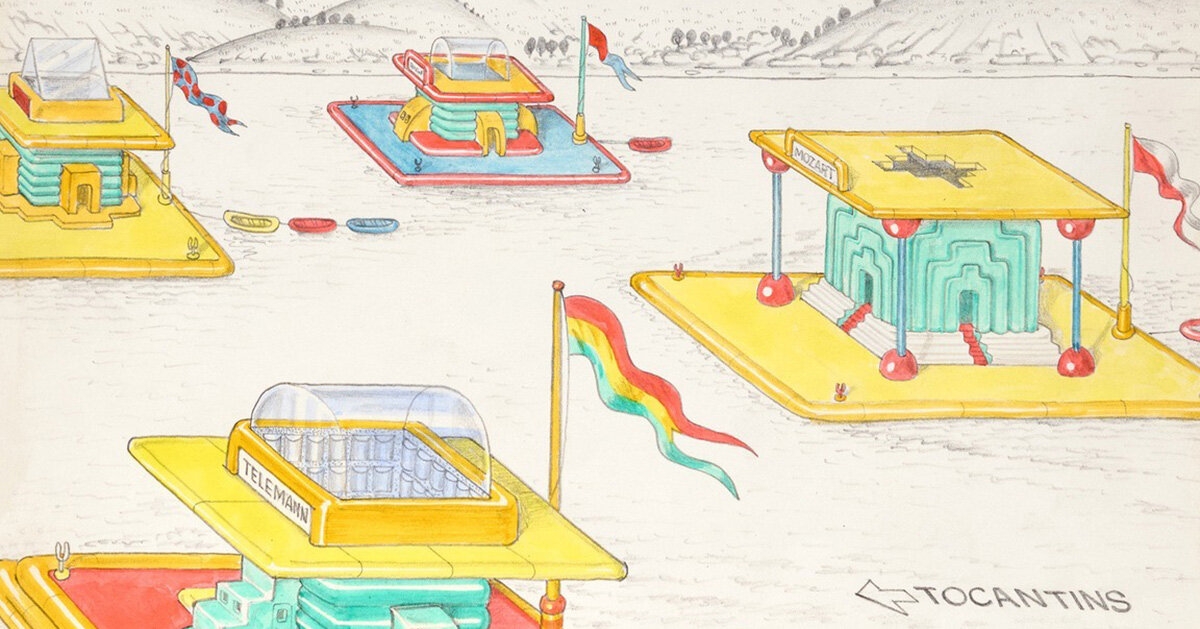
In 1972, Ettore Sottsass published Il Pianeta come Festival, proposing a radical reimagining of human settlement without traditional architecture. Rather than fixed cities with centers and hierarchies, Sottsass envisioned Earth as a dispersed landscape organized by temporary events and gatherings. The proposal eliminates permanent monuments, urban centers, and enduring structures. Instead, it features floating rafts carrying music, temples hosting rituals, atmospheric dispensers creating sensory experiences, and lightweight infrastructures designed for wandering rather than function. This vision emerged during a moment when modernist architecture's rational promises were fracturing, and consumer culture was reshaping urban experience.
"There are no plans, no sections, no systems to be implemented. Instead, the project imagines the Earth as a continuous field of human events, where architecture no longer stabilizes life. Sottsass describes a world structured by temporary gatherings instead of being organized through fixed forms."
"The city, as we know it, disappears as a stable entity. There are no centers, no hierarchies, no enduring monuments anchoring space. In its place, a dispersed planetary landscape unfolds, animated by events. Rafts drift from the sources of the Tocantins toward the sea, carrying listeners through landscapes of chamber music."
"Dispensers release waltzes, tangos, rock, or even altered states through incense and substances, turning atmosphere into architecture. Elsewhere, vast but fragile infrastructures appear, such as a panoramic road stretching like a lightweight, 'useless' version of the Great Wall, designed not for defense but for wandering, cycling, and stopping for picnics."
#utopian-architecture #temporary-settlements #anti-permanence-design #event-based-urbanism #postmodern-architecture
Read at designboom | architecture & design magazine
Unable to calculate read time
Collection
[
|
...
]