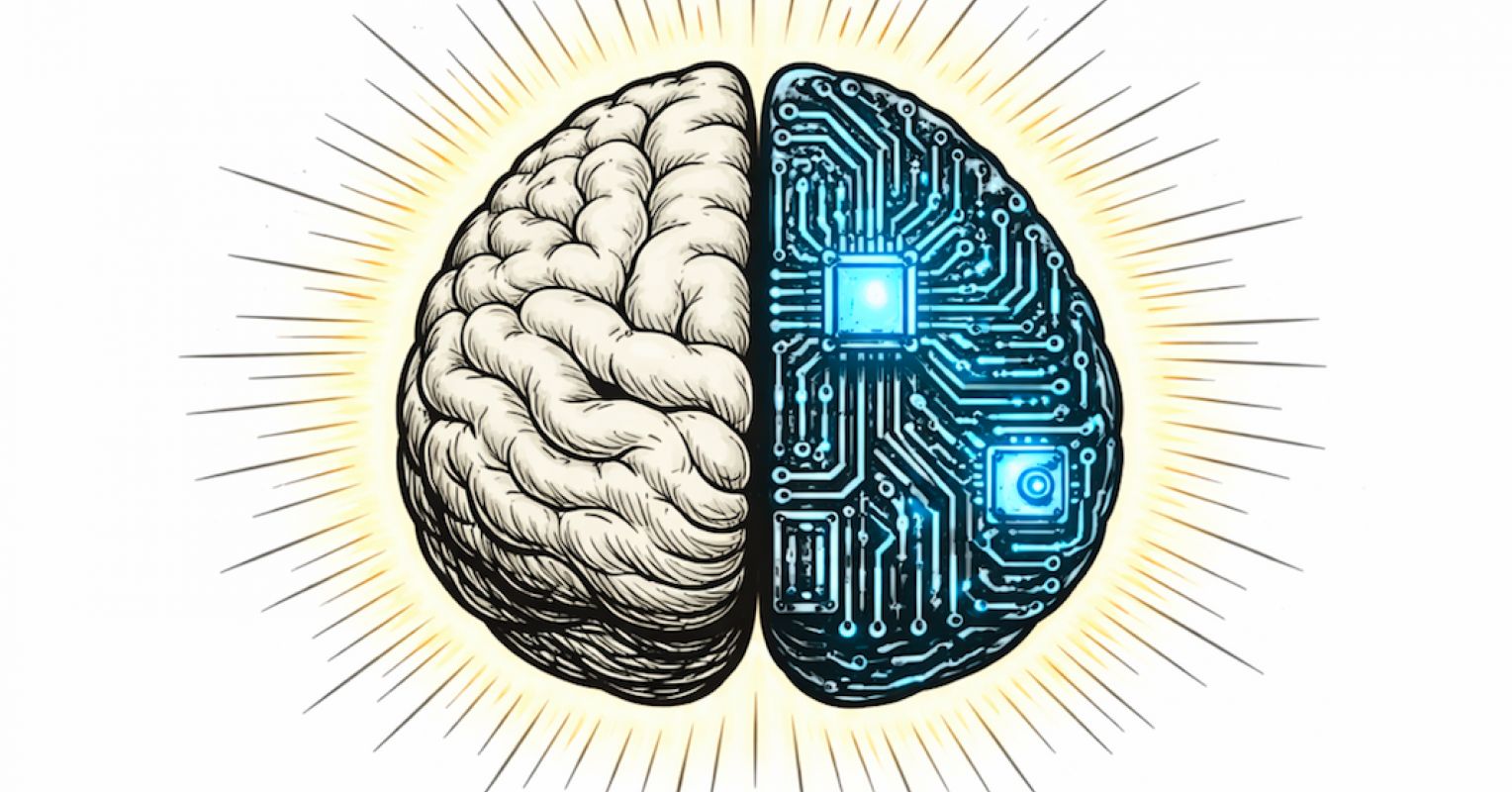
AI has reduced the friction of cognition, delivering structurally and intellectually complete answers with unprecedented ease. Where questions once required gradual assembly and effort, responses now often arrive fully formed and sometimes before the question is fully defined. Human thinking has historically been active and constructive, with the struggle between question and answer shaping judgment and internal architecture. That effort built participatory thinking through friction, confusion, and gradual formation. The new cognitive climate places humans more often in the role of evaluator than originator, creating a risk of emergent passivity in human cognitive stance rather than a problem of machine thought.
"Something is changing in how we think. Artificial intelligence (AI) has lowered the friction of cognition in ways that feel almost natural, if not inevitable. Questions that once demanded "brain power" time now return with both structural and intellectual completeness. What previously required the acquisition and assembling of fragments now arrives fully formed and perhaps even before we have completely defined the question. The convenience isn't trivial; it's transformatively powerful."
"In the 18th century, Immanuel Kant described the mind as fundamentally active. Experience does not simply inform us; we organize it. We participate in shaping what becomes meaningful. Thinking, in this context, isn't just reception but construction. Thinking is inexorably tied to the lived experience. For most of human history, this construction was unavoidable. The space between question and answer required engagement because no external system could collapse it for us."
Read at Psychology Today
Unable to calculate read time
Collection
[
|
...
]