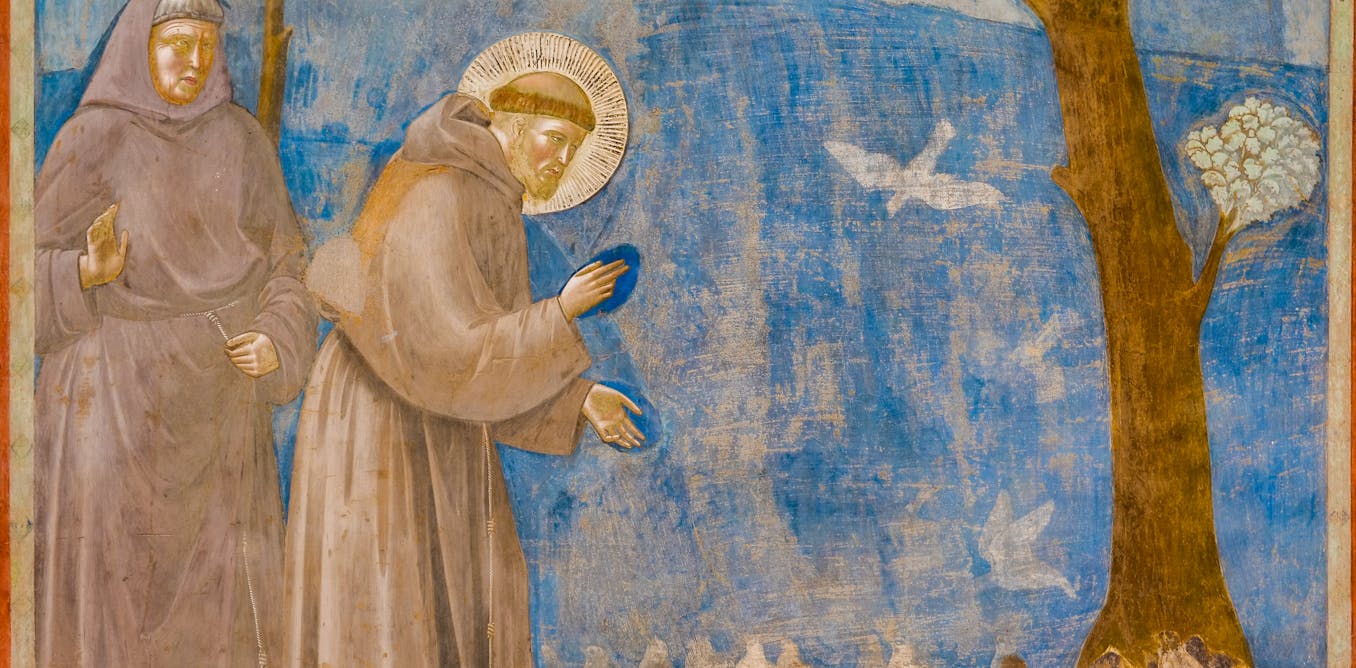
"On the 800th anniversary of the death of St. Francis of Assisi, founder of the Franciscan order, his body will be displayed for the first time ever in February 2026, at the Basilica of San Francesco. Millions of visitors are expected to converge in the small Tuscan town of Assisi to honor the 13th-century saint."
"Francis, who died on Oct. 4, 1226, espoused care for the poor and reverence for the natural world. Those values were reflected centuries later in the actions of Pope Francis. The late pope chose his papal name in honor of the medieval saint's embrace of the poor and his teachings on the moral responsibility of caring for all creatures on Earth."
"What historians and theologians know about Francis comes primarily from his own writings and hagiographic texts. Hagiography is a form of religious biography that celebrates the virtuous lives of saints, often recounting miracles attributed to them, both in their lifetime and after their death. Devotees often visit their tombs to seek a miraculous intervention."
On the 800th anniversary of his death, St. Francis of Assisi's body will be displayed for the first time in February 2026 at the Basilica of San Francesco, attracting millions of visitors. Francis died on Oct. 4, 1226, and championed care for the poor and reverence for the natural world. Centuries later, Pope Francis adopted his name in recognition of those values. Born into a merchant family around 1181, Francis renounced his family's wealth and was called Il Poverello. He founded the mendicant Franciscan order in 1209. Knowledge of his life relies on his writings and early hagiographies; devotees often visit saintly tombs seeking miracles.
#st-francis-of-assisi #franciscan-order #poverty-and-charity #environmental-stewardship #hagiography
Read at The Conversation
Unable to calculate read time
Collection
[
|
...
]