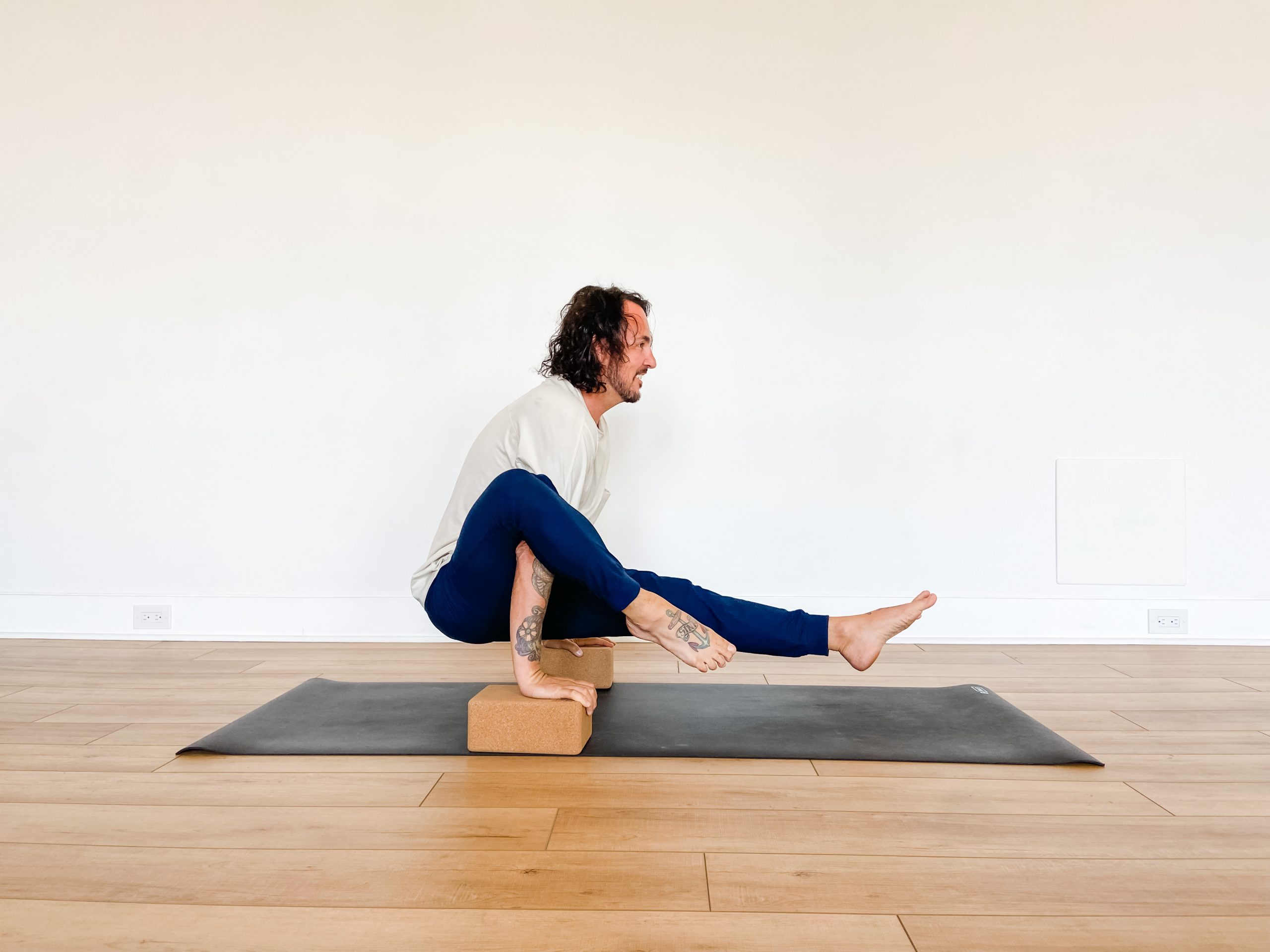
Arm balances require strength, agility, coordination, and concentration in both body and mind. They tone the arms, wrists, shoulders, back, and abdomen while demanding flexibility and mobility in the hips and shoulder joints. With continued practice, lightness, equanimity, and poise develop as tension and strain are released. Effort remains to maintain the pose, but it shifts from strain to relaxation in action, described as strength through integration rather than hardness. Eka Hasta Bhujasana, also called Elephant Trunk Pose, is a foundational arm balance with the leg over the upper arm above the elbow. Utthan Pristhasana (Lizard Pose) supports arm-balance practice by deeply opening the hips, groins, hamstrings, hip flexors, and also the upper back, shoulders, and neck.
"Arm balances require strength, agility, coordination, and concentration in both body and mind. Physically they tone the arms, wrists, shoulders, back, and abdomen. They also require flexibility and mobility of the hips and shoulder joints."
"Ultimately, as we continue to practice these physically challenging poses we begin to develop lightness, equanimity, and poise. The effort to maintain the pose remains, yet tension and strain is released and left behind."
"Arm balances undoubtedly require a fair amount of effort, especially at first, but as we refine our practice we can start to find strength as integration, not hardness, which is relaxation is action or effortless effort."
"Eka means "one," Hasta means "hand" and Bhuja means "arm." This pose is translated as one hand and arm pose but often referred to as "Elephant Trunk Pose" as the shape resembles the trunk of an elephant. This arm balance is in the family of poses with the leg over the upper arm (above elbow) and is a great place to start before moving onto poses such as Koundinyasana II, Tittibhasana, Bhujapidasana, and Astavakrasana."
Read at YogaRenew
Unable to calculate read time
Collection
[
|
...
]