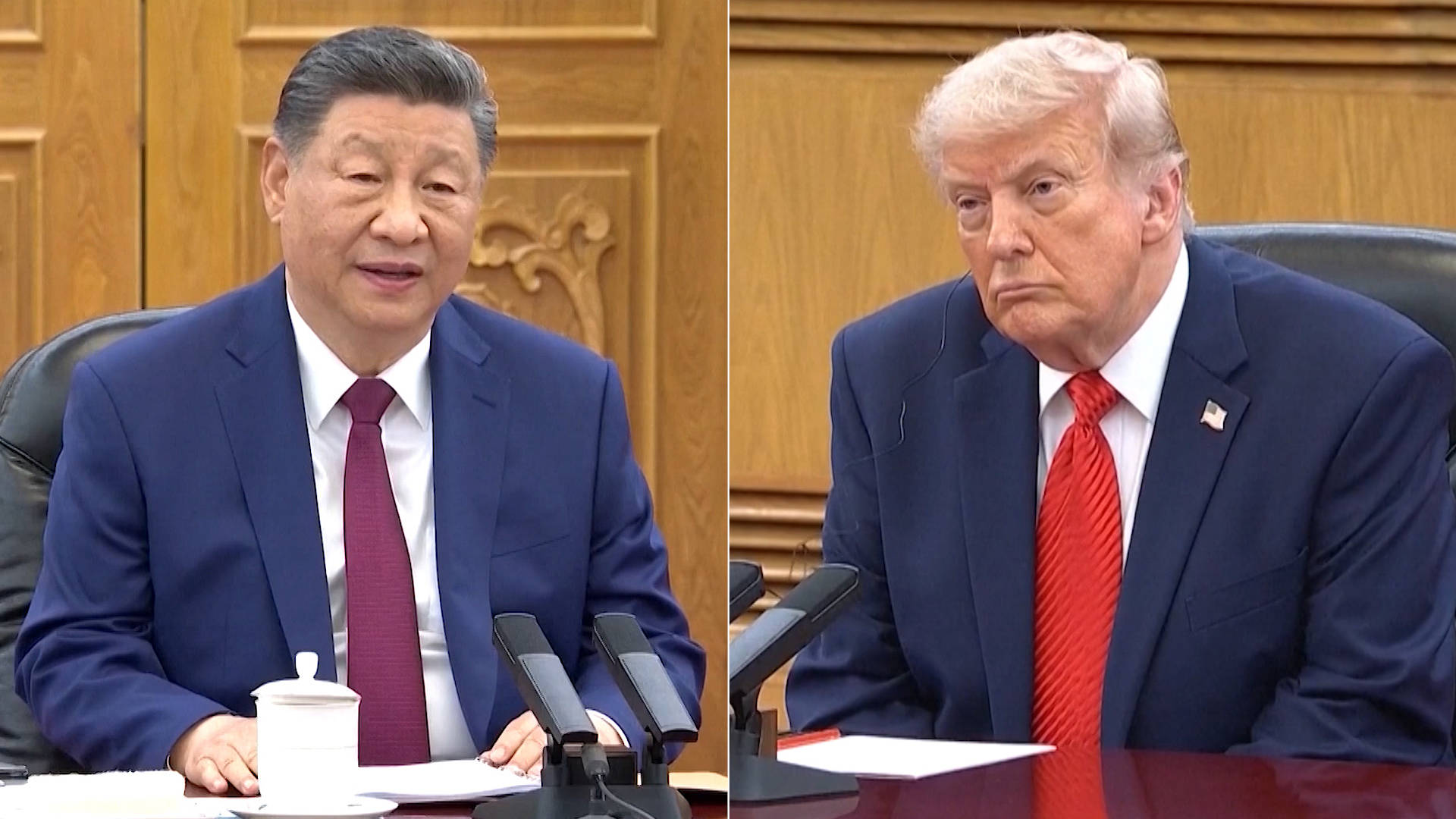
"Trump is in Beijing for a highly anticipated summit with his Chinese counterpart President Xi Jinping. It is the first U.S. state visit to China since 2017, during Trump's first administration. Trade, the Iran war, artificial intelligence and the fate of Taiwan are some of the issues being discussed, although it's not clear if any new agreements are likely."
"The summit comes after years of rising hostility between the two superpowers, but leaders recognize the importance of improving the bilateral relationship, says Zhao Hai, director of international political studies at the Institute of World Economics and Politics in Beijing. "This is a very critical historical moment [at] a crossroad, and both sides now are working together to establish a stable relationship that will have a global ramification," he says."
"We also speak with Jake Werner, a historian of modern China and director of the East Asia Program at the Quincy Institute for Responsible Statecraft. He says the U.S.-Israeli war on Iran and the resulting economic chaos have strengthened China's position. "China has ties to all the countries in the region. It has acted in the past to help broker the normalization of relations between Saudi Arabia and Iran," says Werner."
""So it has some experience in this realm, sort of acting as a broker towards peace." Trump traveled to China with Secretary of State Marco Rubio, Defense Secretary Pete Hegseth and Treasury Secretary Scott Bessent, along with a delegation of top U.S. executives including Apple CEO Tim Cook, Elon Musk of Tesla and Jensen Huang of Nvidia."
Trump is in Beijing for a two-day summit with Xi Jinping, the first U.S. state visit to China since 2017. The talks cover trade, the Iran war, artificial intelligence, and Taiwan, though new agreements are uncertain. Trump travels with senior U.S. officials and major technology and business leaders, including Tim Cook, Elon Musk, and Jensen Huang. The meeting follows years of rising hostility between the two superpowers, but both sides see the moment as critical for building stability with global consequences. China’s regional ties and past mediation experience, including helping normalize relations between Saudi Arabia and Iran, are seen as strengthening its leverage as the Iran conflict and economic disruption reshape regional dynamics.
Read at Truthout
Unable to calculate read time
Collection
[
|
...
]