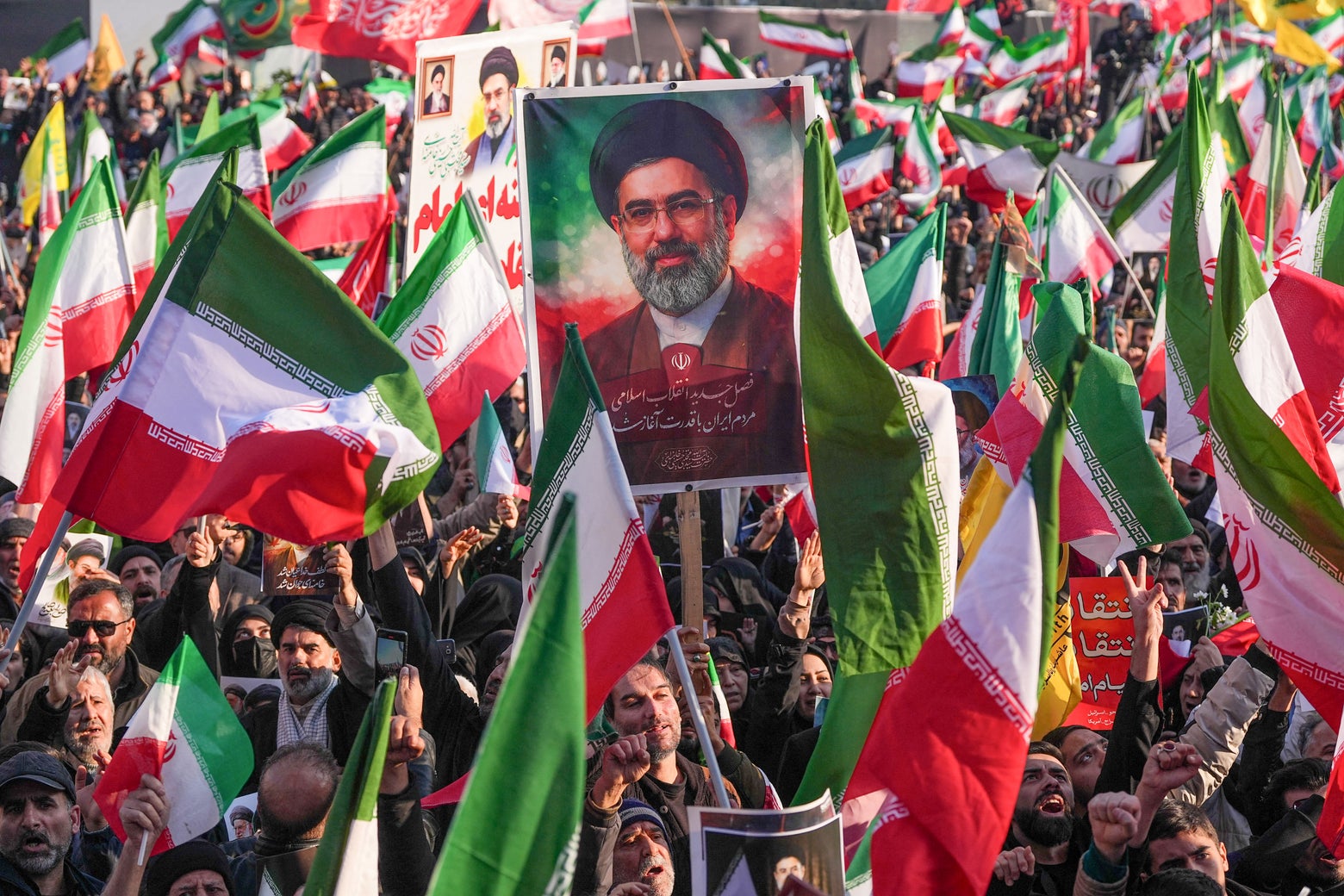
Iran's clerics selected Mojtaba Khamenei, 56, as the new supreme leader following the death of his father Ali Khamenei. The supreme leader holds unique authority in Iran's governing structure, combining both spiritual and military control established after the 1979 revolution. Mojtaba possesses limited religious credentials compared to traditional supreme leaders but brings decades of proximity to power through his father's administration. His selection represents continuity for the regime rather than significant change. The supreme leader position was originally designed for highly distinguished Shiite clerics with extensive religious scholarship, but Mojtaba's appointment reflects the regime's preference for maintaining existing power structures.
"His power comes from the fact that he's been sitting right there at the right hand of his father for decades. He's been right there where decisions are made, and I think he was chosen in part because he represents a kind of status quo for this regime, unpopular as it is."
"Iran's governing structure is unique in the world. It's a fascinating system that started off in 1979. And in a nutshell, what Iran tried to do was overthrow a secular monarchy and replace it with an authoritarian religious order. At the top of that order would be the Shiite cleric, who had the most distinction as a religious scholar, and that person would be the head of state, and all power would flow through that."
Read at Slate Magazine
Unable to calculate read time
Collection
[
|
...
]