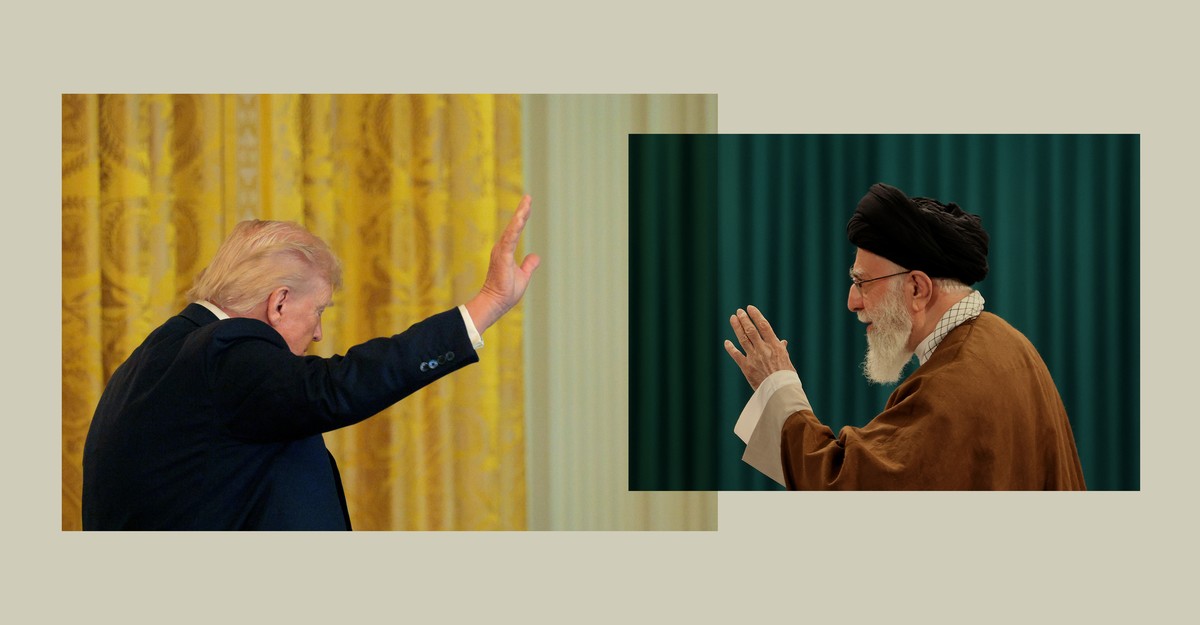
The U.S.-Iran conflict stems from miscalculations by Donald Trump and Ali Khamenei, each driven by different forms of hubris. Trump's performative strength prioritizes appearing dominant over negotiation, viewing geopolitics through theater and dealmaking rather than complexity. Khamenei's ideological rigidity centers on survival and maintaining his theocratic rule. Trump approaches high-stakes diplomacy with amateur certainty, historically favoring dominance displays over substantive engagement. His decisions—withdrawing from the nuclear deal, killing Iran's general, and bombing nuclear sites—reflect his belief in superiority. Khamenei, having secured power through violence, focuses on cold survival mechanics. Both leaders' distorted perceptions of bargaining power create dangerous miscalculations that escalate conflict.
"On the eve of each war at least one of the nations miscalculated its bargaining power. In that sense every war comes from a misunderstanding. And in that sense every war is an accident."
"Donald Trump and Ali Khamenei have little in common except for a vainglorious hubris that has distorted their strategic choices. For Trump, the conflict is a high-risk, high-reward gambit—the ultimate deal, with the Middle East as the table. For Khamenei, whose official compound was targeted by air strikes, it is something simpler and older: a fight for survival."
"Trump has long approached high-stakes geopolitics with an amateur's certainty. He saw the complexities of enriched uranium and ballistic missiles as secondary to the theater of dominance. And in that arena, he believes he has the upper hand against Iran—a view reinforced by his experience, including his 2018 withdrawal from President Obama's nuclear deal, his 2020 killing of Iran's top general, and his 2025 bombing of Iran's nuclear site."
#us-iran-conflict #political-miscalculation #leadership-hubris #nuclear-diplomacy #strategic-decision-making
Read at The Atlantic
Unable to calculate read time
Collection
[
|
...
]