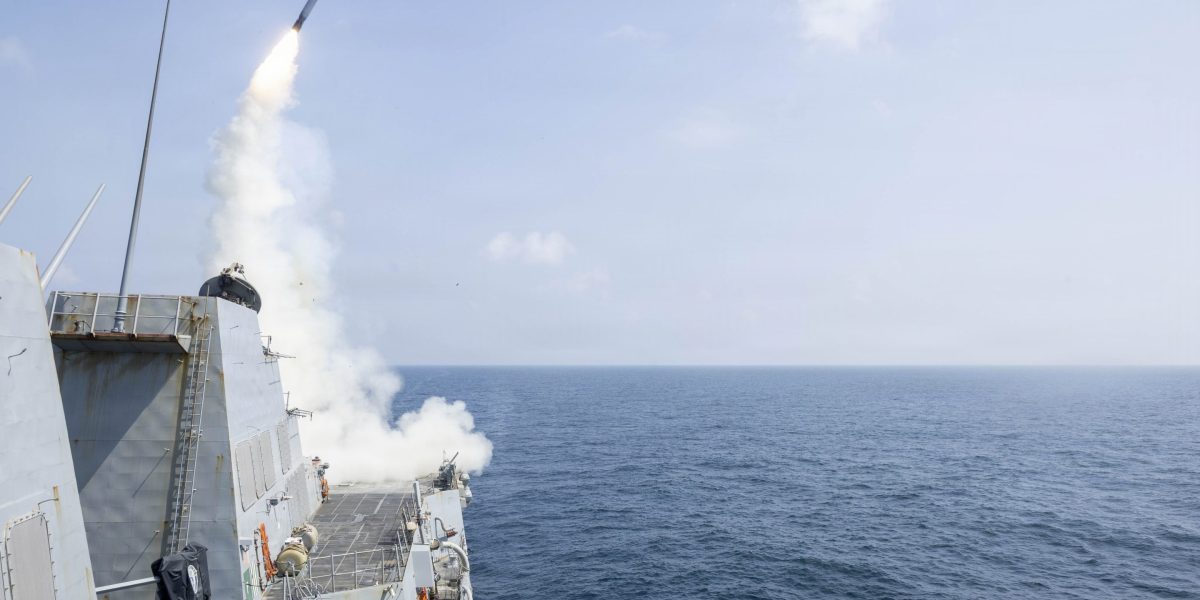
The Iran conflict has highlighted a shift in warfare economics towards inexpensive, mass-produced weapons, necessitating a reevaluation of military procurement strategies. Despite significant losses, Iran maintains sufficient combat capability, particularly through the use of cost-effective Shahed drones. This creates a significant cost imbalance, as Western nations must deploy expensive interceptors to counter these threats. Production and supply-chain issues exacerbate this situation, with U.S. munitions stockpiles rapidly depleting, raising concerns about readiness against potential peer competitors like China.
""Even with interception rates above 90%, the value of asset protection is diminished given the obscene economics. This imbalance has haunted Western military planners since the early days of Russia's invasion of Ukraine.""
""Mass losses are a feature not a flaw, because even the most advanced defenses can be overwhelmed with sufficient volume. The cost asymmetry is worsened by severe production and supply-chain constraints.""
""The diminished munitions stockpiles have created a near-term risk. A war against a capable peer competitor like China will consume munitions at greater rates than in the Iran conflict.""
Read at Fortune
Unable to calculate read time
Collection
[
|
...
]