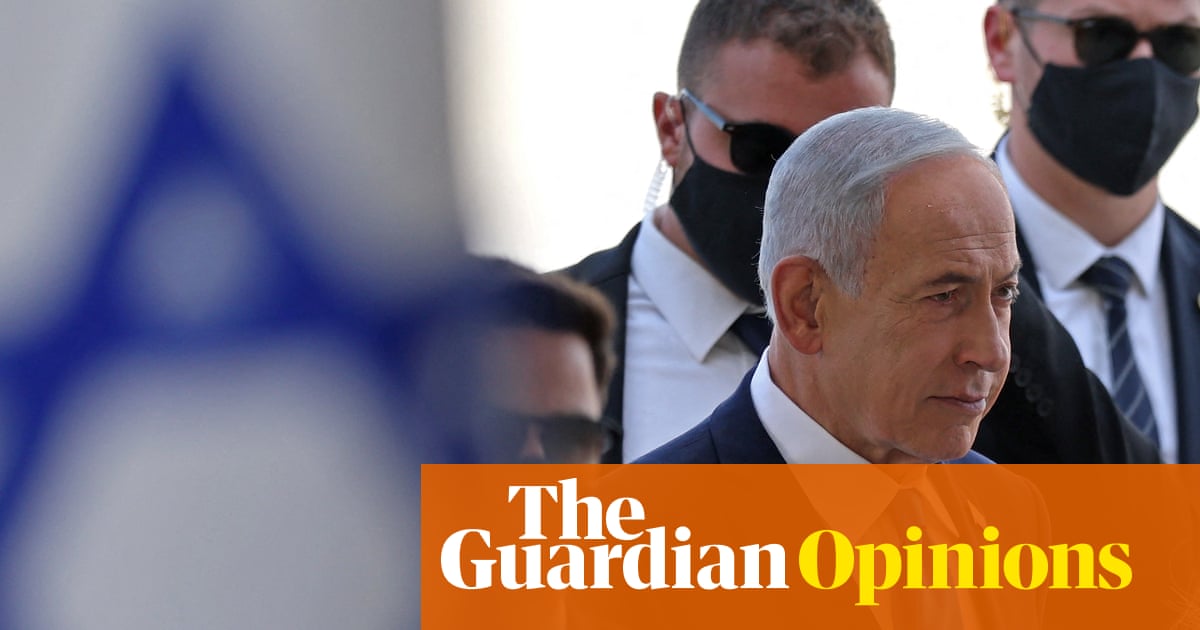
"Rabin's response to the looming Iranian threat was negotiating land-for-peace deals with Israel's immediate neighbours the Palestinians, Jordan, Syria and Lebanon following the example of the pre-existing peace with Egypt. He argued that a ring of normalisation would strengthen Israeli security and counter the rise of radical Islam, and believed there was an urgency to conclude the peace process before Iran, following the Israeli example, acquired the bomb and became a regional hegemon."
"Benjamin Netanyahu, who took the reins in the wake of Rabin's assassination, amplified his predecessor's warning about Iran but flipped the conclusion. To Netanyahu, who opposed giving even an inch of land for peace or the establishment of a Palestinian state, the Iranian threat served as the ultimate justification. Netanyahu argued that any area evacuated by Israel would turn into an Iranian-backed terrorist base, and therefore Israel must hold its occupied territories."
"Three decades on, Iran holds hundreds of kilos of uranium enriched to near-weapons grade, and is potentially weeks away from having a functional bomb. To Israeli policymakers, the permanent almost-there status of Iran's nuclear programme has made it into Samuel Beckett's Godot always on the verge of arrival but never getting there."
When Yitzhak Rabin became Israeli prime minister in 1992, he identified Iran as a greater long-term threat than Iraq due to its Islamist ideology, regional proxies, and nuclear ambitions. Rabin pursued land-for-peace negotiations with Palestinians, Jordan, Syria, and Lebanon, believing regional normalization would strengthen Israeli security and counter radical Islam before Iran acquired nuclear weapons. He predicted Iran could cross the nuclear threshold within a decade. After Rabin's 1995 assassination, Benjamin Netanyahu amplified warnings about Iran but inverted the strategic conclusion, arguing that any Israeli territorial withdrawal would become Iranian-backed terrorist bases. Netanyahu used the Iranian threat to justify maintaining Israeli control over occupied territories. Three decades later, Iran possesses hundreds of kilos of near-weapons-grade uranium, remaining perpetually on the verge of nuclear capability without achieving it.
#israeli-iranian-relations #nuclear-proliferation #israeli-security-strategy #middle-east-peace-process #regional-geopolitics
Read at www.theguardian.com
Unable to calculate read time
Collection
[
|
...
]