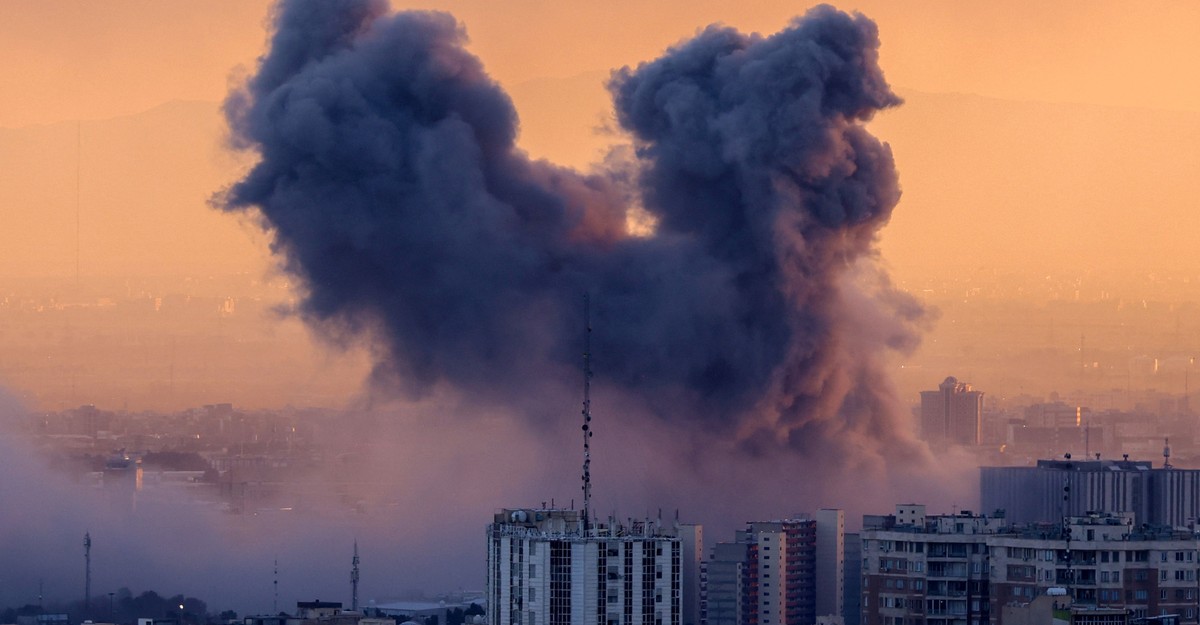
"When a war begins, our emotions often overtake our ability to analyze and judge. That is a problem not only for those who wage war, engaging either directly as combatants or indirectly as senior leaders, but for the rest of us. That partial eclipse of reason is on full display in the current Iran war, exacerbated by previously held beliefs about the leaders of the United States and Israel on the one hand, and about the Iranian regime on the other."
"In any war, even the most just, maintaining domestic support is essential to victory, because the outcome is inherently uncertain. To be sure, the complaint that the Trump administration has not specified exactly how and when this war will end is captious. Abraham Lincoln did not know how the Civil War would end, and Franklin D. Roosevelt did not know how World War II would end."
"Wars never end the way those who engage in them think they will. Because of that, a president or a prime minister must work assiduously to bring his public along. Few wars had greater legitimacy in Great Britain than that of 1939-1945, but Winston Churchill rightly believed it essential to maintain public support."
When wars begin, emotional responses often override rational analysis for both decision-makers and the public, creating problems for accurate judgment. This emotional eclipse is particularly evident in the current Iran conflict, where preexisting beliefs about U.S., Israeli, and Iranian leadership distort perspectives. War advocates overlook poor strategic communication and lack of allies, focusing instead on military ferocity. However, maintaining domestic support proves essential for any war's success due to inherent uncertainty in outcomes. Historical precedent shows wars rarely conclude as anticipated—Lincoln, Roosevelt, Wilson, Bush, and Obama all miscalculated their wars' trajectories. Leaders must actively cultivate public support throughout conflicts, as demonstrated by Churchill's approach during World War II.
#war-and-strategy #emotional-reasoning-in-conflict #domestic-support-and-leadership #iran-conflict #historical-war-analysis
Read at The Atlantic
Unable to calculate read time
Collection
[
|
...
]