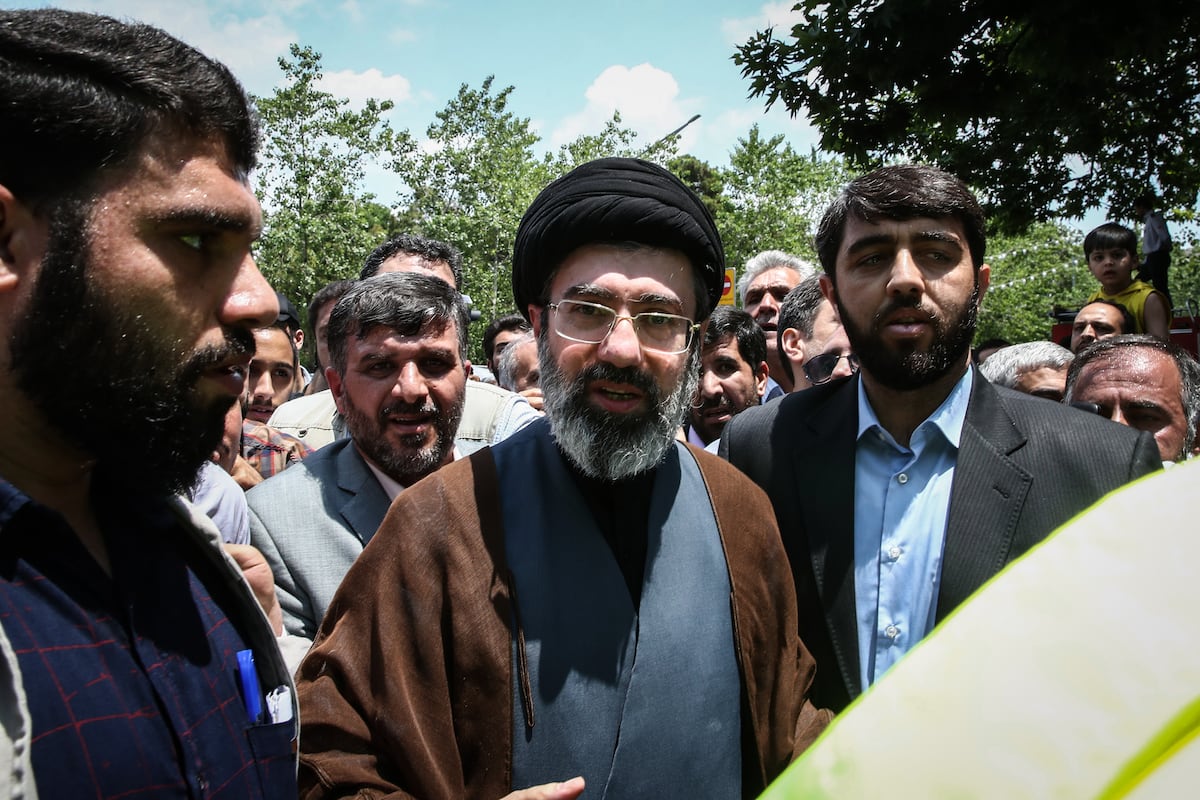
"At a time when the debate over succession to the top of the Islamic Republic has become one of the most sensitive and decisive issues in Iranian politics, the name of Mojtaba Khamenei is resonating more than ever in the media and in analytical circles both inside and outside Iran. This is not due to his social popularity or an official career in executive positions, but rather to his deep ties with the most hardline commanders of the Revolutionary Guard and with the security apparatus and the inner circle of power."
"For more than two decades, Mojtaba Khamenei has deliberately remained out of the public eye. He is not a well-known imam, an elected politician, or even a cleric with widespread recognition among the system's social base. This absence is not accidental: it is part of a pattern that has made him a completely behind-the-scenes figure within the system, a man who operates in the shadows, makes decisions, but is not held accountable."
Mojtaba Khamenei, 56, emerges as the primary candidate to succeed his father as Iran's supreme leader, though he remains largely unknown to the public. His influence derives not from social popularity or official executive positions, but from deep connections with hardline Revolutionary Guard commanders, security apparatus officials, and the inner circle of power. For over two decades, he has deliberately maintained a low public profile, operating behind the scenes without accountability. His early involvement in the Iran-Iraq War at age 17 with the Habib ibn Muzahir Battalion proved more symbolic than operational, but established crucial networks within hardline military formations that would shape his subsequent influence and position as a symbol of continuity for current supreme leader Ali Khamenei's policies.
#iran-succession-politics #mojtaba-khamenei #revolutionary-guard-influence #islamic-republic-leadership #iranian-power-dynamics
Read at english.elpais.com
Unable to calculate read time
Collection
[
|
...
]