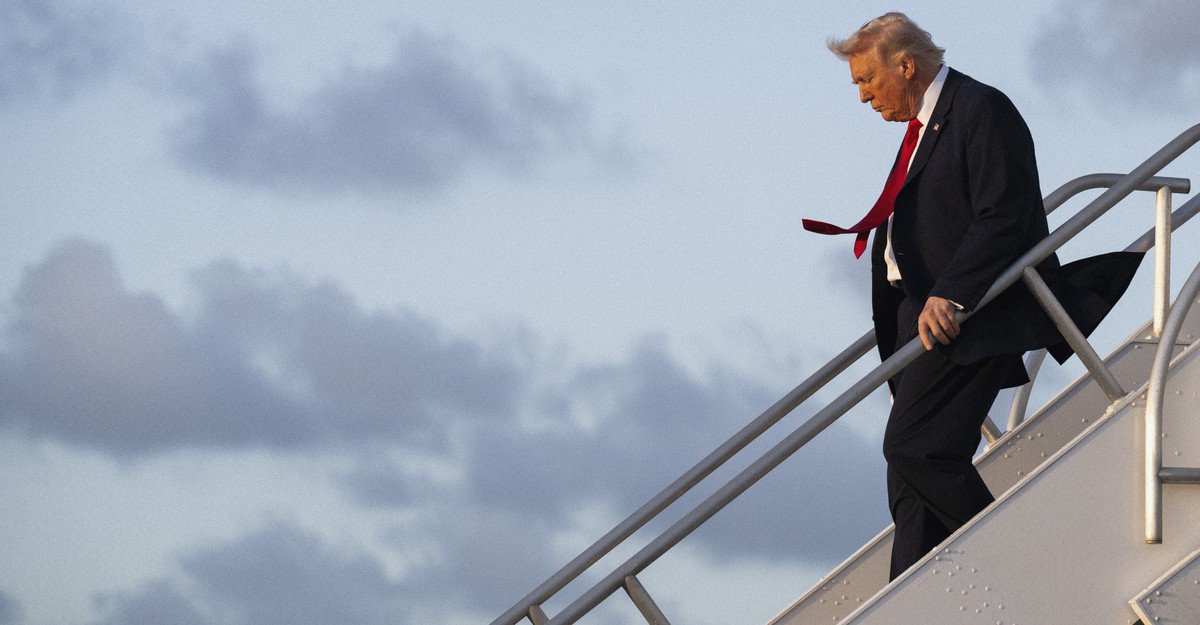
"He does not connect actions he takes on one day to events that occur weeks later. He does not think about how his behavior in one place will change the behavior of other people in other places. He does not consider the wider implications of his decisions. He does not take responsibility when these decisions go wrong. Instead, he acts on whim and impulse, and when he changes his mind-when he feels new whims and new impulses-he simply lies about whatever he said or did before."
"For the past 14 months, few foreign leaders have been able to acknowledge that someone without any strategy can actually be president of the United States. Surely, the foreign-policy analysts murmured, Trump thinks beyond the current moment. Surely, foreign statesmen whispered, he adheres to some ideology, some pattern, some plan. Words were thrown around- isolationism, imperialism -in an attempt to place Trump's actions into a historical context."
"They can see that, as a result of decisions that Trump made but cannot explain, the Strait of Hormuz is blocked by Iranian mines and drones. They can see oil prices rising around the world and they understand that it is difficult and dangerous for the U.S. Navy to solve this problem. They can also hear the president lashing out, as he has done so many times before, trying to get other people to take responsibility, threatening them if they don't."
Trump operates without strategic, historical, or rational thinking, making decisions based on whim and impulse rather than long-term planning. He fails to connect his actions to subsequent events or consider how his behavior in one location affects people elsewhere. When decisions produce negative outcomes, he refuses responsibility and lies about previous statements. Foreign leaders initially assumed Trump must have some underlying strategy or ideology, attempting to contextualize his actions within frameworks like isolationism or imperialism. However, his decisions often lack deeper meaning, such as his interest in Greenland based merely on its appearance on maps. Recent consequences, including Iranian blockades in the Strait of Hormuz and rising oil prices, demonstrate real-world impacts of his unexplained decisions, prompting him to deflect blame and pressure others to solve problems he created.
#trump-decision-making #foreign-policy-consequences #strategic-thinking #accountability-and-responsibility #geopolitical-instability
Read at The Atlantic
Unable to calculate read time
Collection
[
|
...
]