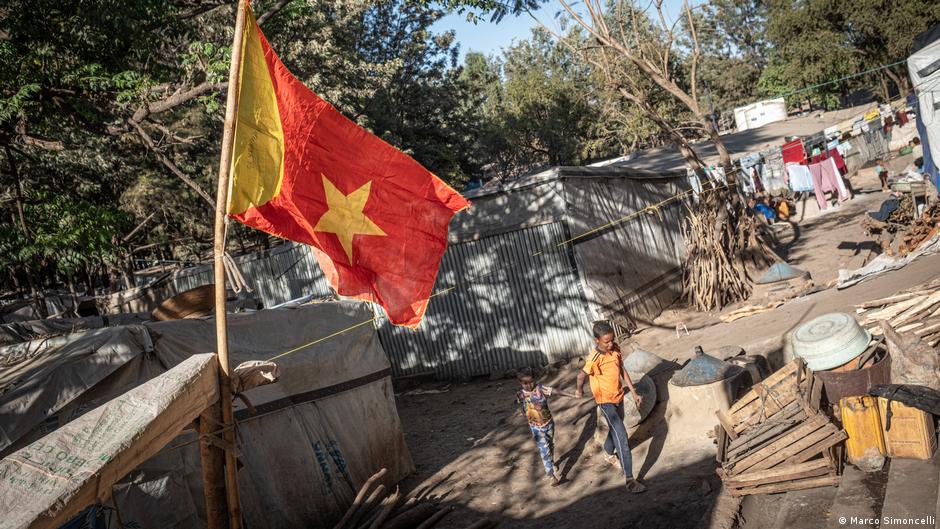
No delegates represent Tigray in Ethiopia’s House of Peoples’ Representatives or the House of Federation. Tigray’s absence from federal political institutions is expected to last another year if elections in 2026 are missed, extending the gap to a full decade. Questions have been raised about whether Tigray can still be treated as part of Ethiopia. The federal government is legally required to ensure Tigray’s representation in federal institutions under a 2022 agreement mediated by the African Union. The agreement has largely reduced active fighting but has not restored democracy in Tigray. TPLF claims that more than 40% of Tigray’s sovereign territory is under enemy control, preventing a representative election. The region also faces displacement, with many internally displaced people and refugees not yet able to return, undermining election legitimacy.
"There is not a single delegate in Ethiopia's outgoing lower house of parliament, known as the House of Peoples' Representatives, nor in the upper house the House of Federation currently representing the embattled Tigray region. Missing out on another election in 2026 will bring Tigray's total absence from the political arena in Addis Ababa to a full decade. Many wonder where this leaves the region, as tensions appear to flare up again."
"Ethiopia's federal government is legally mandated to ensure and facilitate the representation of Tigray in its federal institutions, including the two chambers, as per the agreement signed following AU-led mediation in Pretoria in 2022. However, that agreement has repeatedly failed to live up to expectations, other than largely succeeding in silencing active fighting in the region; above all, it has not helped bring democracy back to Tigray."
"“More than 40% of the sovereign territory of Tigray is under enemy control,” says Tigray People's Liberation Front (TPLF) spokesman Michaele Asgedom, highlighting that the region is unable “to conduct an election” after years of conflict. Asgedom explains that millions of internally displaced people who had fled from Tigray due to the bloody civil war have not returned home, in addition to countless people who had originally sought refuge in neighboring Sudan; any election held in Tigray would therefore not be representative of all Tigrayans."
"“Can we still say with certainty that 'Tigray is part of Ethiopia?' I am not sure,” says Alemayehu Fentaw, a fellow at the Center for Constitutional Democracy at the Indiana University Maurer School of Law. Others seem to share a similarly despondent view of the situation or worse."
Read at www.dw.com
Unable to calculate read time
Collection
[
|
...
]