"“Only a Republican, perhaps only a Nixon,” he told U.S. News & World Report, “could have made this break and gotten away with it.” This notion entered the political lexicon to denote a particular kind of calculation: that on certain issues, only a hard-liner has the credibility to pursue a softer line and survive politically."
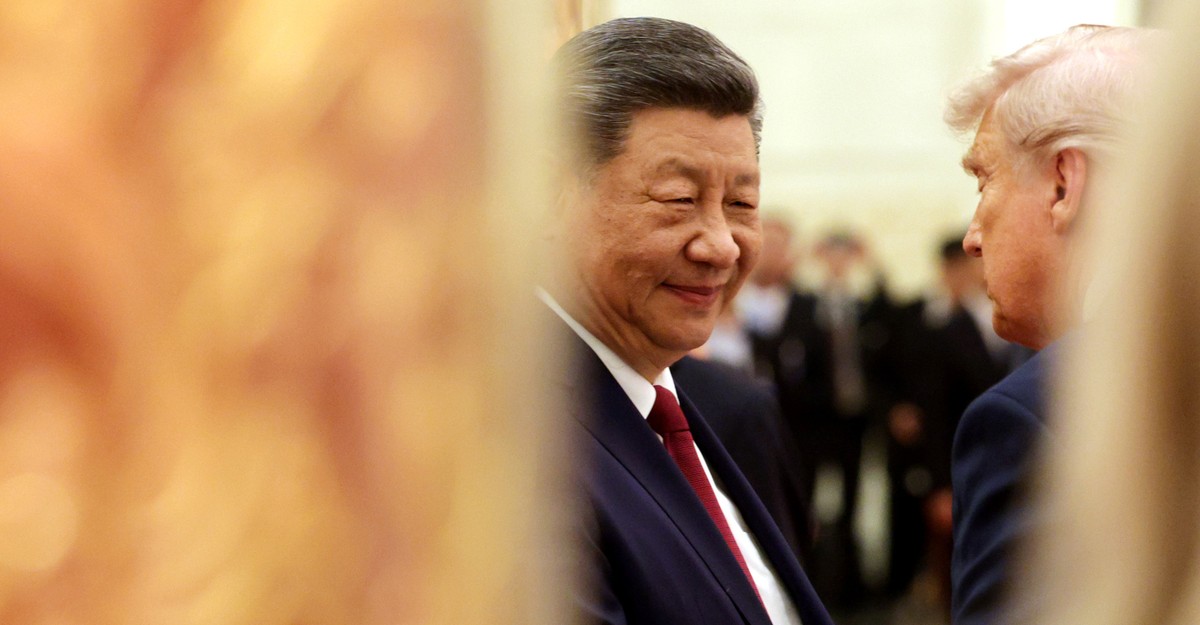
"Last week in Beijing, Donald Trump had his Nixon moment. He scrapped a policy that combined hard-headed diplomacy with action to protect U.S. interests and check Chinese power. In its place, he embraced the notion that a personal bond with Chinese leader Xi Jinping can ensure stability. Trump is getting away with this move politically. Geopolitically, he will not."
"In recent decades, Republicans and Democrats have largely agreed to treat China as a strategic competitor. The United States has tightened export controls on advanced technology, reduced its economic exposure to China, and thickened its web of alliances across the Indo-Pacific. That shift began during the first Trump administration; the Biden administration intensified it."
"Trump has long been a vocal critic of China. He began his second term with a trade war that pushed tariffs on Chinese goods to 145 percent. He reversed course after China retaliated and demonstrated, through its grip on rare-earth processing, that it could inflict real pain in return. Then he began speaking of his great personal relationship with Xi and of the advent of a U.S.-China G-2."
In 1971, a U.S. presidential visit to Beijing marked a major geopolitical shift, and a remark captured how only a hard-line figure could make a bold move and survive politically. That idea later became shorthand for a calculation where credibility from toughness enables a softer approach on certain issues. In Beijing, Donald Trump abandoned a policy combining firm diplomacy with actions to protect U.S. interests and limit Chinese power. He instead emphasized stability through a personal relationship with Xi Jinping. The move may work politically, but it weakens deterrence, increases risk to Americans, and encourages China, making a future crisis more likely. Recent U.S. policy has treated China as a strategic competitor through technology export controls, reduced economic exposure, and stronger Indo-Pacific alliances.
#us-china-relations #geopolitics #presidential-diplomacy #strategic-competition #trade-and-technology-controls
Read at The Atlantic
Unable to calculate read time
Collection
[
|
...
]