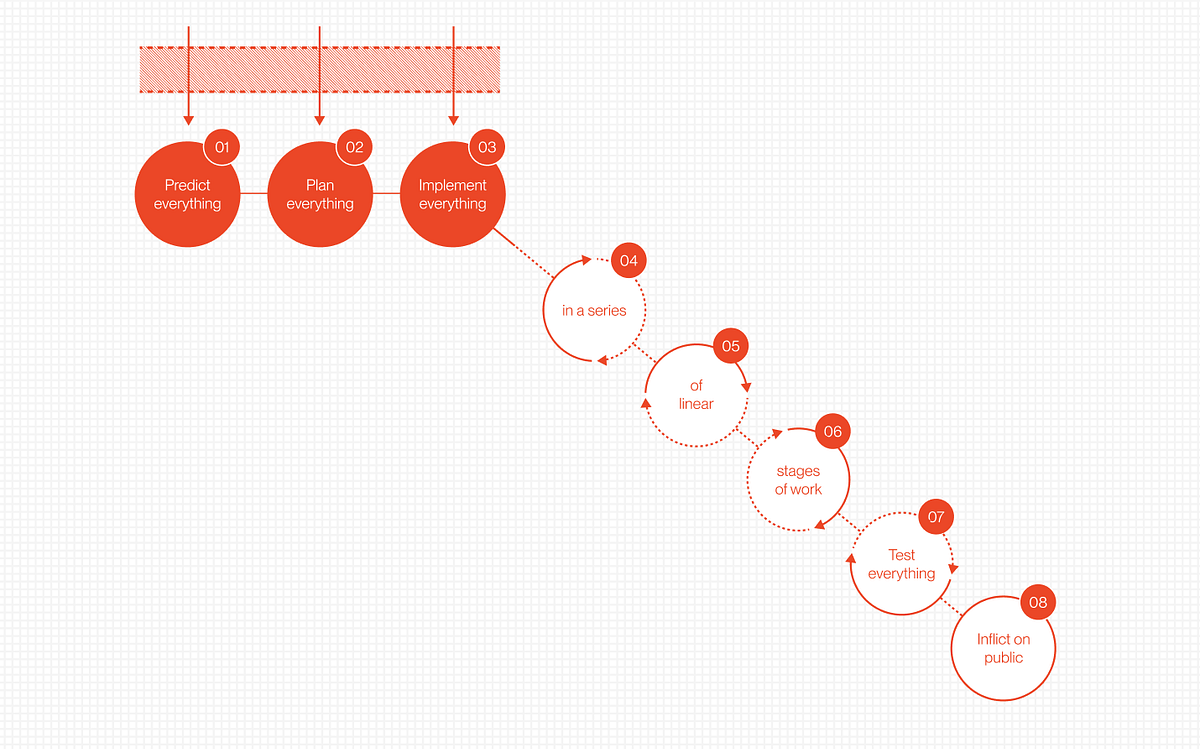
"To be clear, the answer is not to burn everything down and start again. It points in a very different direction from the chainsaw, scorched-earth approach of the Elon Musks of the world. As Andy Knight reminded me, most of what government does is stewardship - and that function is indispensable. It depends on stable, convergent, waterfall prediction policymaking. It is what keeps the lights on. Literally."
"The problem is that we continue to run all forms of decision-making - certain and uncertain - through the same architecture inherited from a New Public Management era, an architecture built on the assumption that if you press a button, you know something will happen - as if governing were a computational task with bounded rationality rather than a socio-technical one."
"This is the foundation for a state that is able to work with uncertainty rather than suppress it - what Kattel, Drechsler, and Karo describe as agile stability: the capacity to generate new directions while maintaining long-term institutional coherence."
Stable government functions rely on convergent, waterfall prediction policymaking to steward everyday systems and keep essential services running. Transformative change, missions, and early-stage sense-making require space for divergent creativity, structured exploration, and collective judgement to work with uncertainty rather than suppress it. The current decision-making architecture from the New Public Management era treats governance as a computational task with bounded rationality, suitable for stable stewardship but failing where uncertainty, judgement, learning, and creativity are necessary. That mismatch produces institutional drift and hollowed-out "muddling through" instead of pragmatic adaptation, undermining long-term coherence and innovation.
Read at Medium
Unable to calculate read time
Collection
[
|
...
]