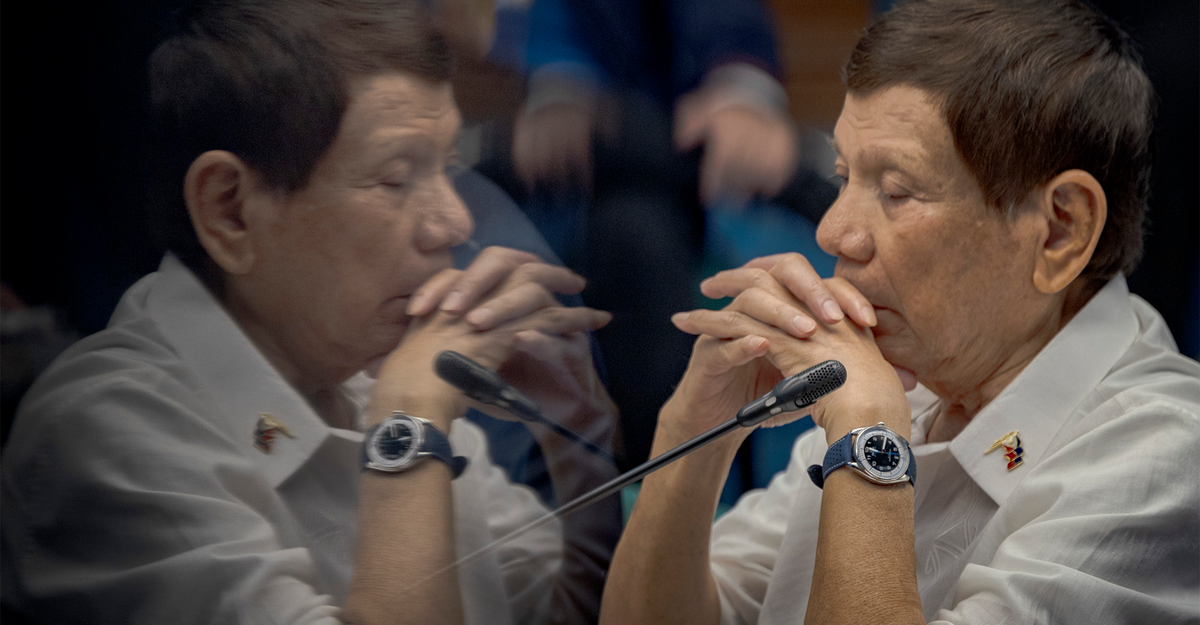
"Rodrigo Duterte was elected president of the Philippines in 2016 on the promise that he would kill. He framed his war in moral terms: Drug users transgressed the laws of society, but the justice system was so broken and so corrupt that they evaded punishment. Due process stood in the way of keeping the innocent and the virtuous safe."
"Government tallies put the number of drug suspects killed during Duterte's time in office at about 6,000. But human-rights groups claim that the number of extrajudicial killings may be as high as 30,000. Many of my fellow Filipinos thought that the carnage was justified. They saw Duterte as the slayer of the elite and the scourge of criminals."
"Duterte left office in 2022. Four years later, he still commands a fanatic following in the Philippines and retains a grip on the public imagination. He is larger than life; his language is violent and profane. He projected such an aura of invincibility that many believe, even now, that he is beyond accountability."
"But last month, Duterte sat in an austere cell in The Hague as prosecutors argued that he should be tried for crimes against humanity. His only companions were his lawyer, prison staff, and a handful of convicted war criminals. This is a story that traces the path to justice for mass atrocity in the face of public acquiescence."
Rodrigo Duterte won the 2016 Philippine presidential election promising swift justice against drug users, framing his campaign in moral terms while criticizing the broken justice system. Upon taking office, he launched a brutal war on drugs, particularly targeting crystal meth users, claiming they were no longer viable humans. Government records documented approximately 6,000 drug-related deaths, though human rights organizations estimate up to 30,000 extrajudicial killings. Many Filipinos supported the campaign, viewing Duterte as a champion against elites and criminals, while others remained silent. After leaving office in 2022, Duterte retained significant public support and appeared invincible to many. However, he eventually faced prosecution at The Hague for crimes against humanity, marking a significant development in accountability for mass atrocities.
#extrajudicial-killings #drug-war #crimes-against-humanity #international-justice #philippines-politics
Read at The Atlantic
Unable to calculate read time
Collection
[
|
...
]