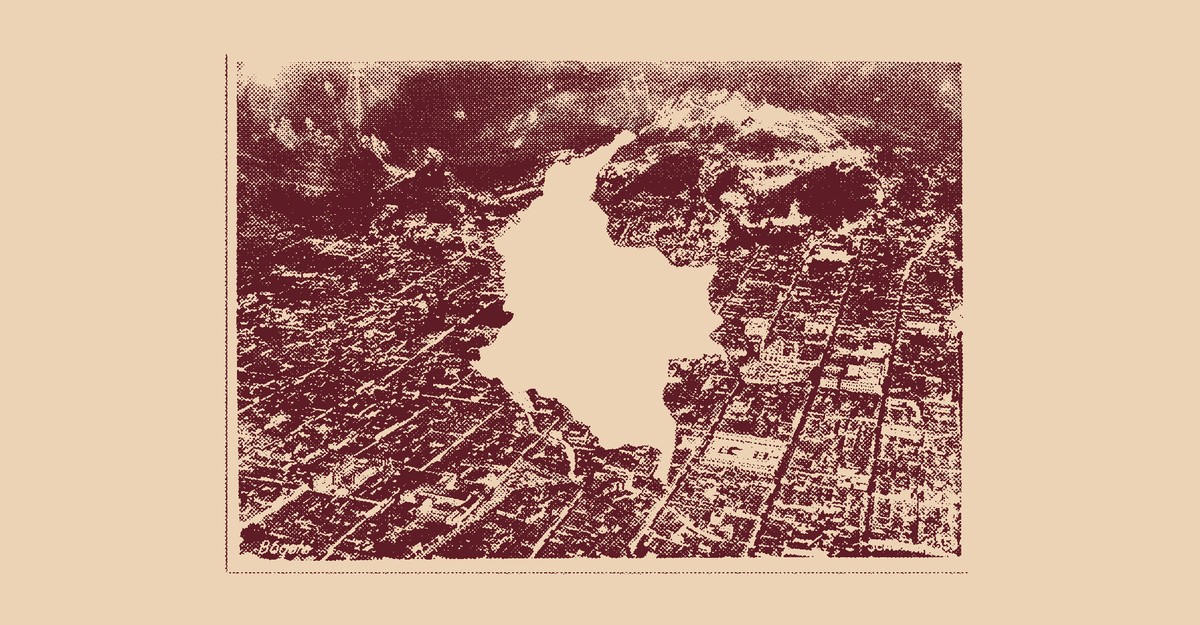
In April 1948, Jorge Eliécer Gaitán was assassinated in Bogotá, triggering El Bogotazo. Crowds burned buildings, looted churches, and seized parts of the capital. The killing set off unrest that marked the start of La Violencia, a brutal Liberal-Conservative conflict that killed more than 200,000 people over the next decade. In 1950, a warning described Colombia’s democracy as beginning to come apart. Rural elites backed armed supporters to defend party power and economic interests. Government actions included intimidation, broken opposition meetings, armed groups terrorizing voters, and emergency decrees restricting democratic life. More than 70 years later, similar patterns were described as Colombia approached a consequential election to choose a successor to President Gustavo Petro.
"In April 1948, after the assassination of the populist leader Jorge Eliécer Gaitán, crowds poured into the streets of Bogotà. Buildings burned. Churches were looted. Armed mobs seized parts of the capital. Gaitán-a labor lawyer turned political phenomenon who seemed poised to become Colombia's next Liberal president-had built a mass following among working-class Colombians frustrated by inequality and elite rule. An enraged crowd beat the alleged gunman to death before his motives could be revealed."
"Gaitán's killing triggered El Bogotazo, the explosion of unrest that marked the beginning of La Violencia, the brutal conflict between Liberals and Conservatives that would kill more than 200,000 Colombians over the following decade. In 1950, an article in The Atlantic warned that Colombia's "promising democracy" was beginning to come apart."
"Across rural Colombia, Liberal and Conservative elites backed armed supporters who fought to defend each party's political power and economic interests. The country's leaders seemed to govern by intimidation: opposition meetings broken up in small towns, armed groups terrorizing voters, emergency decrees restricting democratic life."
"Petro came into office promising to negotiate cease-fires with every major armed group still operating in Colombia, but many of these talks event"
Read at The Atlantic
Unable to calculate read time
Collection
[
|
...
]