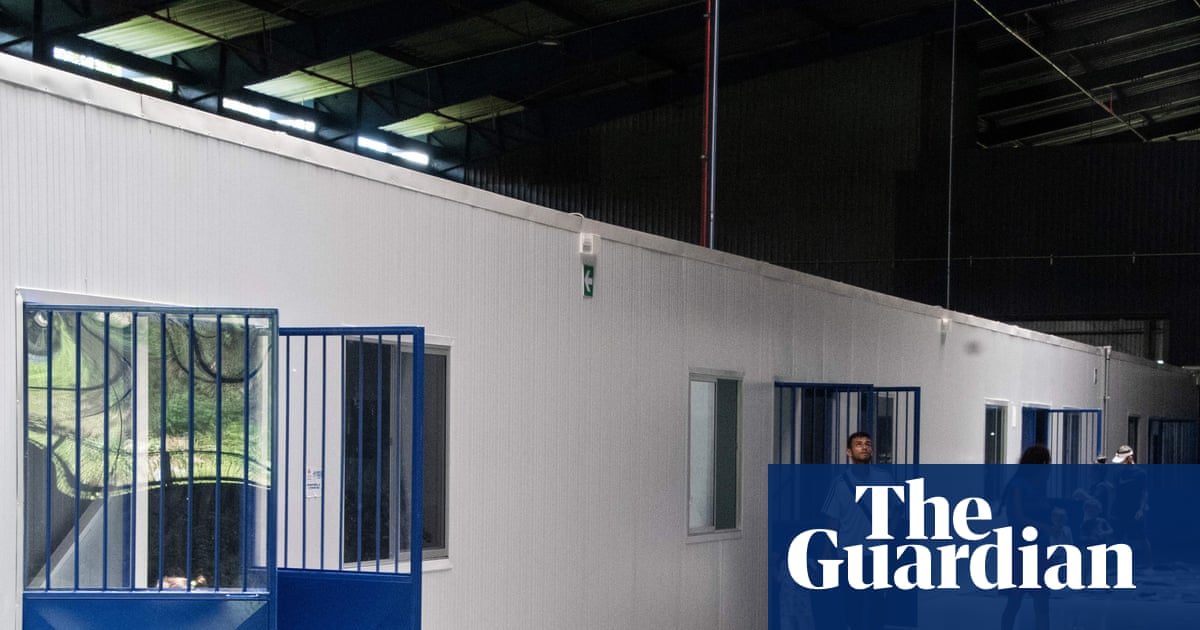
"The world's largest pencil maker has accused the Costa Rican government of misusing an old factory that the German manufacturer donated for humanitarian purposes by detaining asylum seekers there who were deported from the US by the Trump administration last year. Faber-Castell produces more than 2bn wooden pencils a year worldwide and used to have a factory in the southern part of Costa Rica, bordering Panama and supplied by trees cultivated in the region."
"But it closed it down in 2013 because of adverse economic factors, and in 2018 the facility was gifted to Costa Rica by Faber-Castell. In a contract between the company and the ministry of public security, shared with the Guardian, Faber-Castell specified that the premises would be used as a shelter to offer refuge and humanitarian assistance for people migrating through the region. However, last year it appears conditions at the facility changed and people were locked up, with Faber-Castell unaware of this until contacted by the Guardian last month."
"The company said in the contract that the property was to be used to house a shelter for the care of migrants without the possibility of changing the purpose of the property. There are no reports that Nicaraguans or others accommodated at the disused factory were kept in detention until Costa Rica accepted 200 deportees from the US and locked them up at the former factory, since named Centro de Atencion Temporal para Migrantes, or Catem. When the Guardian approached Faber-Castell for comment, the company said it had not realized anyone had been detained at Catem. We agreed and stipulated in the contract that the building was to be transformed into a humanitarian refugee center, and under no circumstances was it agreed to be used as a prison, representative"
Faber-Castell donated a closed Costa Rican pencil factory to Costa Rica in 2018 to serve as a humanitarian shelter for migrants fleeing regional violence. The factory had closed in 2013 due to adverse economic factors and was supplied by locally cultivated trees. The donation contract with the ministry of public security specified use as a shelter offering refuge and humanitarian assistance and forbade changing the property's purpose. Costa Rica later housed about 200 deportees from the United States at the former factory, now named Centro de Atencion Temporal para Migrantes (Catem), where detainees were reportedly locked up. Faber-Castell says it was unaware the facility was used for detention.
Read at www.theguardian.com
Unable to calculate read time
Collection
[
|
...
]