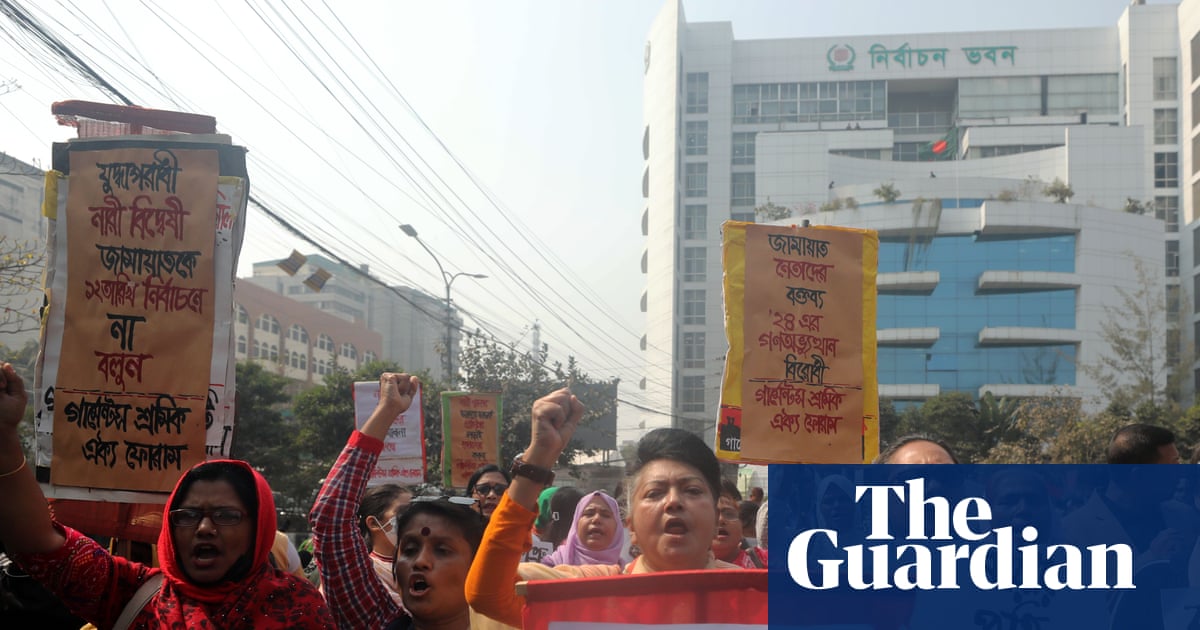
"As the clock hit midnight, the women held their flame torches aloft and marched into the Dhaka night. The people have given their blood, now we want equality, they shouted above the roar of the traffic. For many in Bangladesh, the past few weeks have been a cause for jubilation. The first free and fair elections in 17 years have been promised for Thursday, after the toppling of the regime"
"of Sheikh Hasina in a bloody student-led uprising in August 2024 in which more than 1,000 people died. Opposition figures long persecuted and jailed are now running as candidates, freely holding rallies for the first time in years. The former prime minister is languishing in exile in India and facing a death sentence for crimes against humanity in Bangladesh, and her Awami League party is banned from contesting the election."
"Women marched in Dhaka at midnight Yet for swathes of women in the country, including those who were at the forefront of the revolution, the hope of the election has become tinged with disappointment and fear amid a resurgence of regressive Islamist politics that it is feared will impinge upon women's rights in society and the workplace, and a dearth of female candidates in the running. This was meant to be an"
"election representing change and reform. Instead, we are seeing women being systematically erased and their rights threatened, said Sabiha Sharmin, 25, as she took part in the midnight march. We worry this election will throw the country back 100 years. Among the most oppressed political movements of the Hasina era, when elections were rigged and opponents persecuted, was Jamaat e-Islami, an Islamist party that believes in bringing sharia"
Mass midnight marches in Dhaka celebrated the promise of the first free and fair elections in 17 years after the August 2024 student-led uprising that toppled Sheikh Hasina, in which more than 1,000 people died. Opposition figures long persecuted are now running openly and the former prime minister is in exile facing a death sentence, while the Awami League is banned. Many women who led the revolution fear a resurgence of regressive Islamist politics, a shortage of female candidates, and threats to women's rights in society and the workplace. Jamaat e-Islami has mobilised rapidly and positioned itself as a rival to the BNP.
Read at www.theguardian.com
Unable to calculate read time
Collection
[
|
...
]