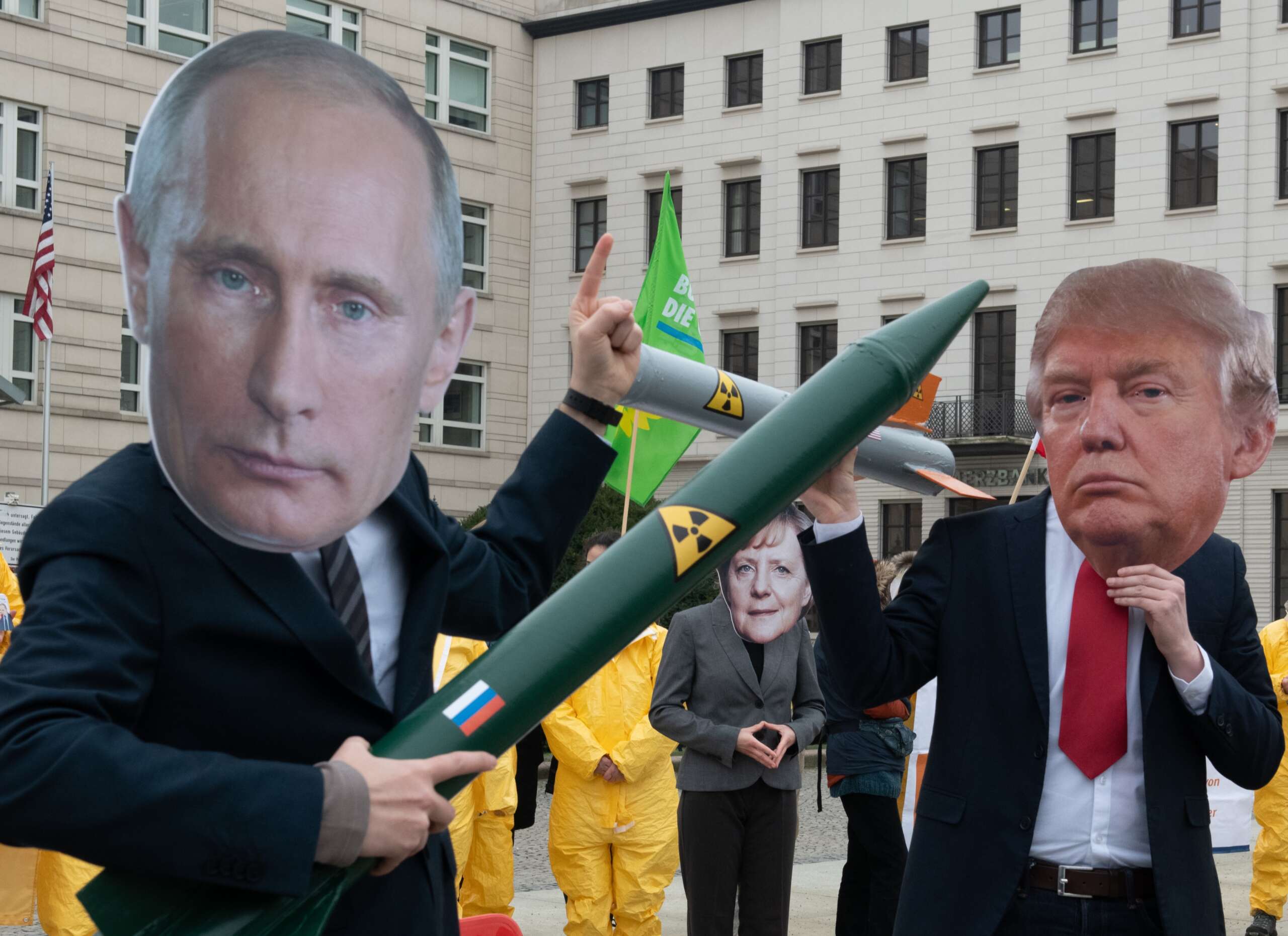
"For most of us, Friday, February 6, 2026, is likely to feel no different than Thursday, February 5th. It will be a work or school day for many of us. It might involve shopping for the weekend or an evening get-together with friends, or any of the other mundane tasks of life. But from a world-historical perspective, that day will represent a dramatic turning point, with far-reaching and potentially catastrophic consequences."
"It's hard to imagine today, but 50 years ago, at the height of the Cold War, the U.S. and Russia (then the Soviet Union) jointly possessed 47,000 nuclear warheads - enough to exterminate all life on Earth many times over. But as public fears of nuclear annihilation increased, especially after the near-death experience of the 1962 Cuban Missile Crisis, the leaders of those two countries negotiated a series of binding agreements intended to downsize their arsenals and reduce the risk of Armageddon."
On February 6, 2026, the United States and Russia will no longer be constrained by any bilateral arms-control treaties, permitting both to expand nuclear stockpiles. During the Cold War the two countries once held about 47,000 warheads, prompting public fear and a series of negotiated limits. Major agreements included SALT I (1972), SALT II (1979, signed but not ratified by the U.S. Senate), and START I and II (1991, 1993), each reducing deployed nuclear forces. The treaty expirations remove legal restraints and increase the risk of renewed nuclear buildup with severe global consequences.
Read at Truthout
Unable to calculate read time
Collection
[
|
...
]