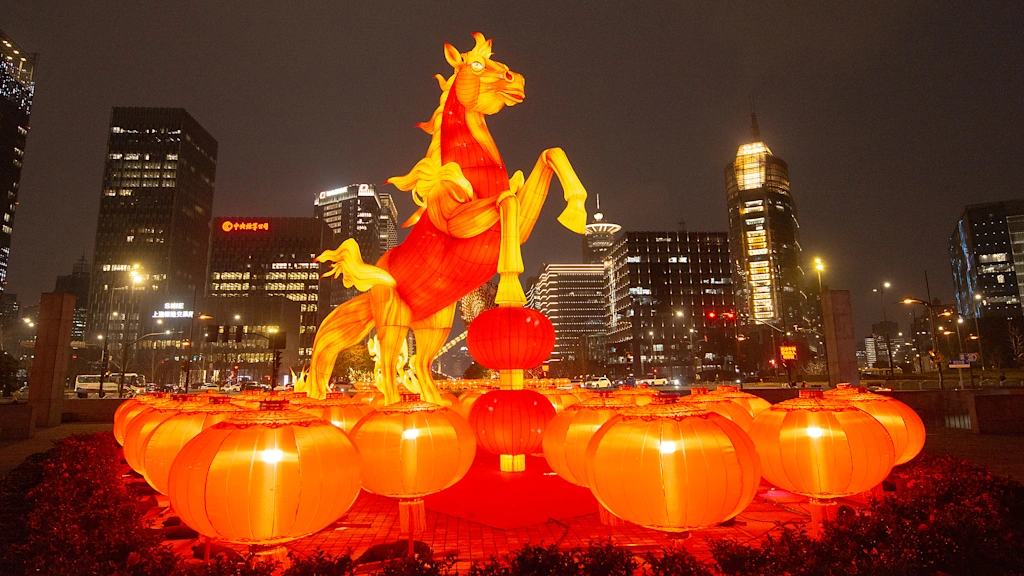
"This year, the Lunar New Year falls on Tuesday, February 17 in China. But, as with the Gregorian New Year on January 1, celebrants hold festivities the night before, leading up to midnight. In this way, Lunar New Year's Eve falls on Monday, February 16 in China, just as New Year's Eve is celebrated on December 31 in the West."
"Unlike many Western holidays, the lunar new year does not have a fixed date. Instead, it typically falls on the full moon closest to Spring. But the Lunar New Year is just the beginning of the festivities in China. It kicks off the beginning of the Spring Festival, which continues for the first week of the new year. Given the cultural importance of the holiday period, hundreds of millions of Chinese travel each year to be with their families and loved ones,"
Chinese New Year, also called the Lunar New Year or Spring Festival, marks the start of the lunar calendar year and typically falls on the full moon closest to spring. The festival launches the Spring Festival week during which hundreds of millions travel to reunite with family, creating the world's largest annual human migration. This year's travel period began February 2 and runs 40 days, with officials estimating about 9.5 billion domestic trips. Lunar New Year's Day is February 17 in China, with Lunar New Year's Eve the night before. Time zone differences mean those dates fall earlier in the United States, and many U.S. celebrants observe local midnight.
Read at Fast Company
Unable to calculate read time
Collection
[
|
...
]