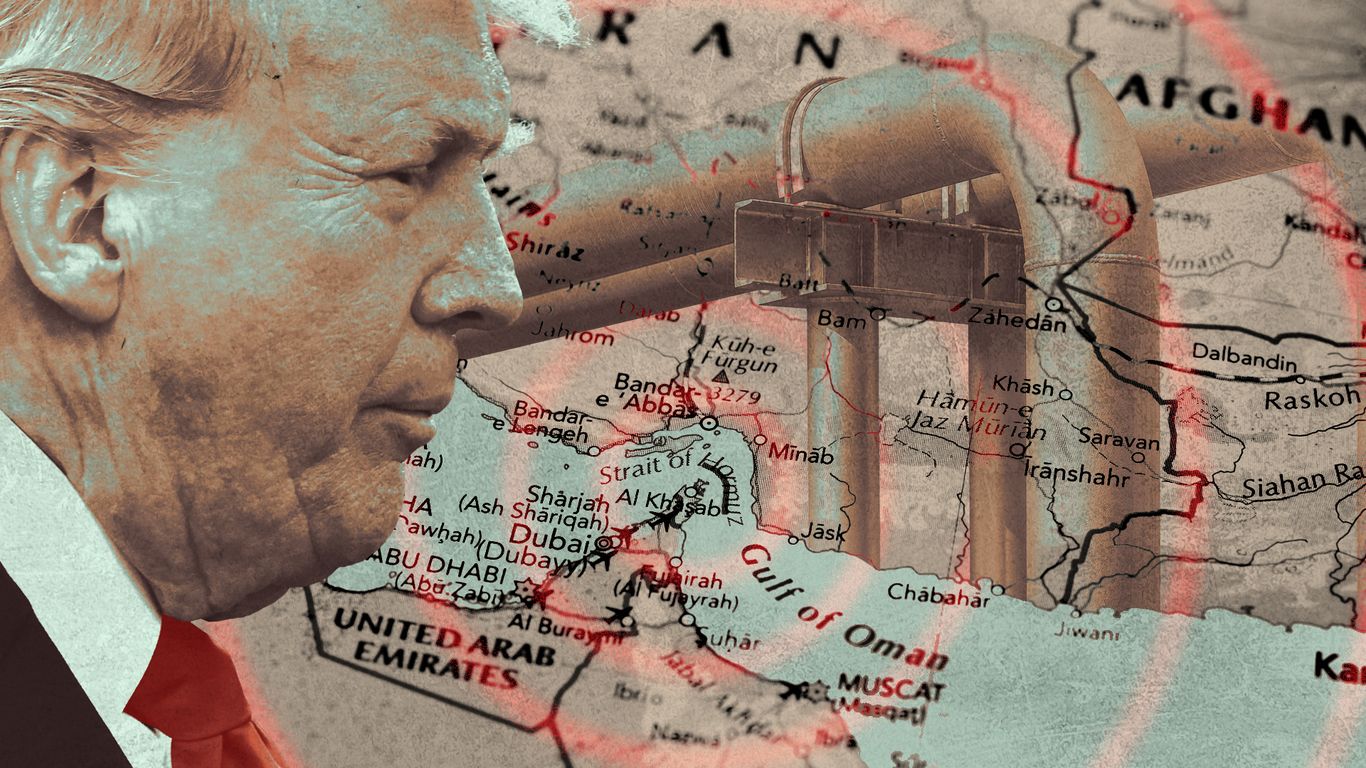
"Iran is prepared to attack commercial ships that try to pass through the strait, 21 miles wide at its narrowest point and surrounded on three sides by Iranian territory. Besides oil shipments, that means disruption to supplies of liquefied natural gas, raw materials for agricultural fertilizer, aluminum, steel and more."
"Brent crude oil, the global benchmark, was up almost 10% Thursday morning, to $101 a barrel, as of 11:30am ET. It was $72.48 before the war began. Notably, the futures curve - the price of Brent crude in future months - remains highly elevated, indicating that traders view ongoing supply problems as more likely than not."
"Goldman Sachs economists, in a report published late Wednesday, modeled a scenario where Brent averages $98 in March and April and then declines for the remainder of the year. That prompted them to raise their 2026 U.S. inflation forecast by 0.8 percentage point, to 2.9%. It trims their 2026 GDP growth forecast by 0.3 percentage point, to 2.2%."
Iran's threat to attack commercial ships through the Strait of Hormuz creates significant global supply disruption risks affecting oil, liquefied natural gas, fertilizer, aluminum, and steel. Oil prices have surged substantially, with Brent crude rising to $101 per barrel from $72.48 before the conflict. Futures markets indicate traders expect prolonged supply problems, with July 2025 contracts remaining elevated above $80 through December. While the U.S. benefits from domestic oil production, global market dynamics mean economic pain cannot be avoided. Goldman Sachs modeling shows sustained high prices would increase 2026 inflation forecasts by 0.8 percentage points and reduce GDP growth forecasts by 0.3 percentage points.
#oil-price-volatility #strait-of-hormuz-disruption #economic-recession-risk #global-supply-chain #inflation-forecast
Read at Axios
Unable to calculate read time
Collection
[
|
...
]