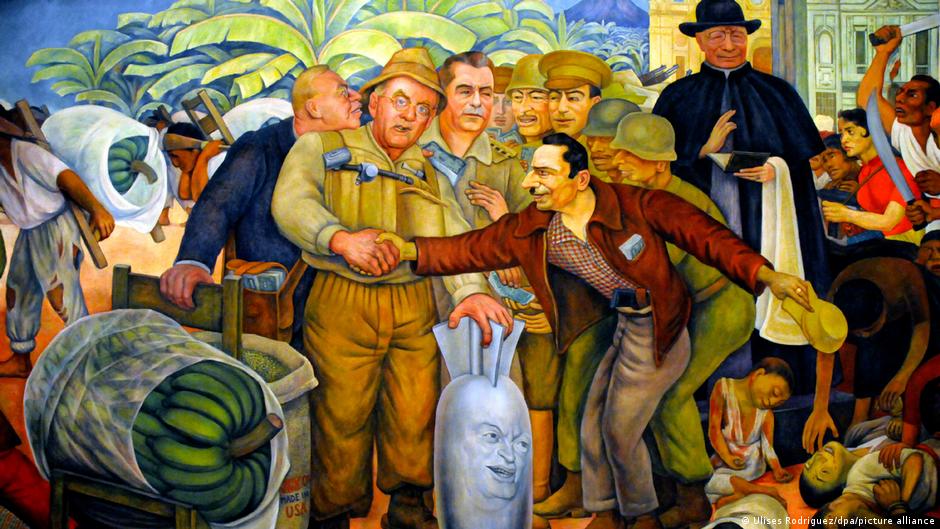
"In the coastal city of Trujillo, he'd observed how the US-owned United Fruit Company dominated the city's railways and docks and wielded significant political influence. This inspired his novel "Cabbages and Kings" (1904), in which he wrote about the fictional republic of Anchuria — a 'small, maritime banana republic' whose government bent to the interests of a powerful foreign corporation."
"Dada, who has covered investigative stories on power, corruption and criminality in Central America, explains that the original "banana republics" were four Central American countries Honduras, Guatemala, Nicaragua and Costa Rica where US banana companies, United Fruit Company and Standard Fruit (now known as Chiquita and Dole respectively), controlled much of the land and political life. With Washington's support, these firms helped install loyal governments and pressured or removed leaders who resisted their terms."
The term originated after observations of US fruit companies' dominance in Honduras, where one company controlled railways, docks and wielded major political influence. That situation inspired a novel portraying a fictional "small, maritime banana republic" whose government served a powerful foreign corporation. Since then, the phrase has become a synonym for corrupt, failed states. Original banana republics included Honduras, Guatemala, Nicaragua and Costa Rica, where United Fruit Company and Standard Fruit controlled land and political life. With Washington's support, those firms helped install loyal governments and pressured or removed leaders who resisted, producing impunity and weakened democratic institutions.
Read at www.dw.com
Unable to calculate read time
Collection
[
|
...
]