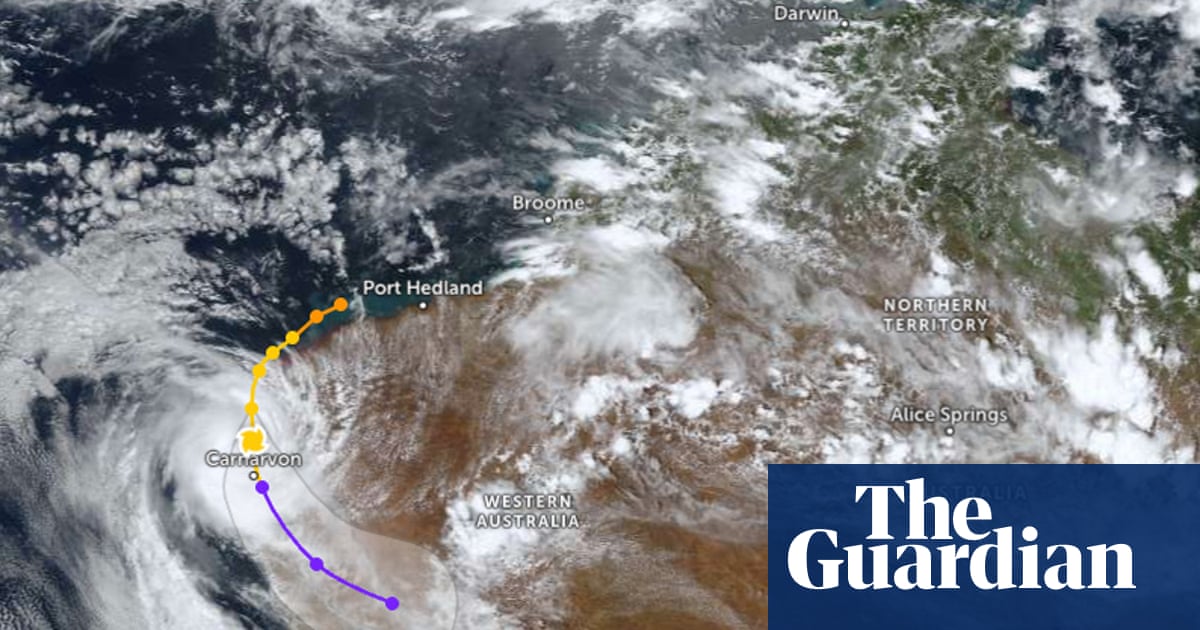
"Tropical Cyclone Mitchell hit the coast of Western Australia last week. It initially developed as a weak tropical low over the Northern Territory in early February, then tracked eastwards over Western Australia's Kimberley region and eventually reached the Indian Ocean. Fuelled by warm waters, Mitchell intensified into a tropical cyclone and moved south-west, hugging the coast of Western Australia and eventually deepened to a category three storm."
"Cyclone Gezani made landfall on Madagascar's east coast on Tuesday, causing major flooding and damaging hundreds of buildings, with winds of 155mph recorded near the city centre of Toamasina. Gezani weakened after making landfall but continued to sweep across the island, killing at least nine people and displacing more than 1,300. Gezani is the second cyclone to hit Madagascar this year, after Tropical Cyclone Fytia just 10 days ago, which killed 14 people and displaced 31,000."
"Meanwhile, the blocked weather pattern across Europe, which brought the very wet start to the year for the west and south-west of the continent, has had the opposite effect farther north-east. Under the influence of persistent high pressure over northern Europe, dry and cold conditions prevailed in large parts of Scandinavia, the Baltics and eastern Europe, resulting in the continent's coldest January since 2010."
Tropical Cyclone Mitchell formed as a weak tropical low over the Northern Territory in early February, tracked east across Western Australia's Kimberley region and reached the Indian Ocean. Warm sea surface temperatures fueled Mitchell's intensification into a tropical cyclone that moved southwest along the Western Australian coast and deepened to a category three storm, producing destructive winds, abnormally high tides and heavy rainfall. Mitchell made landfall in westernmost Western Australia and weakened to a tropical low, with lingering moisture causing further heavy rain and wind damage to farms and businesses. Cyclone Gezani made landfall on Madagascar's east coast, causing major flooding, hundreds of damaged buildings, at least nine deaths and more than 1,300 displaced. A blocked weather pattern over Europe produced very wet conditions in the west and south-west while persistent high pressure brought dry, cold conditions across northern and eastern regions, resulting in the continent's coldest January since 2010.
Read at www.theguardian.com
Unable to calculate read time
Collection
[
|
...
]