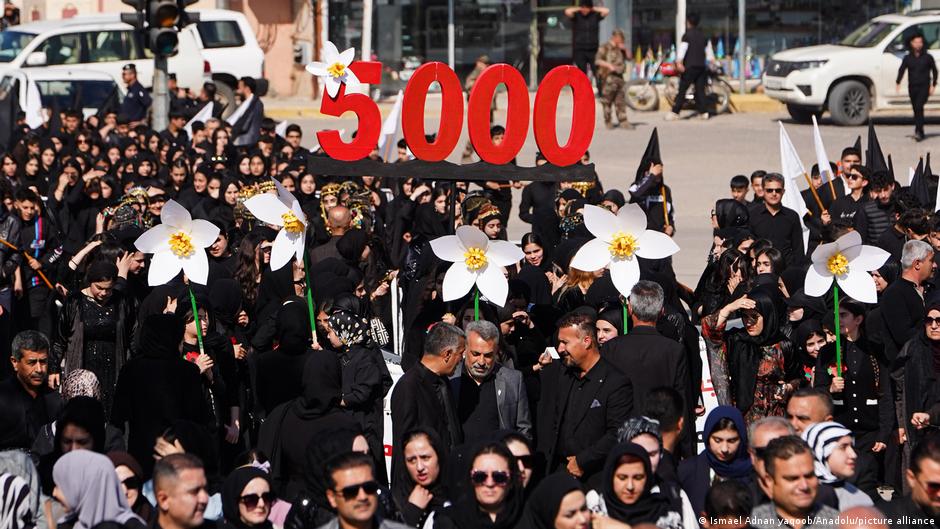
"Some 182,000 Kurds living in Iraqi Kurdistan were killed in 1988 by chemical weapons launched by Saddam Hussein's regime in a series of attacks known as the "Anfal campaign". That campaign included chemical attacks on Halabja, a village on the Iraq-Iran border, and other communities. Five thousand people are estimated to have died in Halabja. They were the victims of sarin and VX nerve agents, and mustard gas."
"Clinical psychologist Ibrahim Mohammed studied the experiences of 500 survivors to quantify the attack's lasting impact on people's mental health. His group found around 4 in 5 survivors met clinical criteria for Post Traumatic Stress Disorder (PTSD) and around 3 in 4 had clinical depression or anxiety, but also found that fewer than 1 in 5 had received treatment for these conditions. Mohammed did not respond to DW's requests for comment."
"Survivors taking part in the study also reported ongoing symptoms of pain, fatigue and other chronic health problems. A long shadow of stigma and suffering Yerevan Saeed was six years old when then-Iraqi dictator Saddam Hussein's regime attacked Halabja, forcing his family to escape the city. Now based in the US as Director of the Global Kurdish Initiative for Peace at the American University, Saeed said the attack looms large in the psyche of Halabja City and surrounding communities targeted in the Anfal campaign."
In 1988, chemical weapons attacks during the Anfal campaign killed about 182,000 Kurds in Iraqi Kurdistan, including an estimated 5,000 victims in Halabja exposed to sarin, VX and mustard gas. Approximately 6,000 people survived the Halabja attack. A study of 500 survivors found roughly four in five met clinical criteria for PTSD and about three in four suffered clinical depression or anxiety, while fewer than one in five had received treatment. Survivors reported chronic pain, fatigue and other long-term health problems. The attack left deep psychological scars, pervasive stigma, and continued uncertainty and grief among affected families and communities.
Read at www.dw.com
Unable to calculate read time
Collection
[
|
...
]