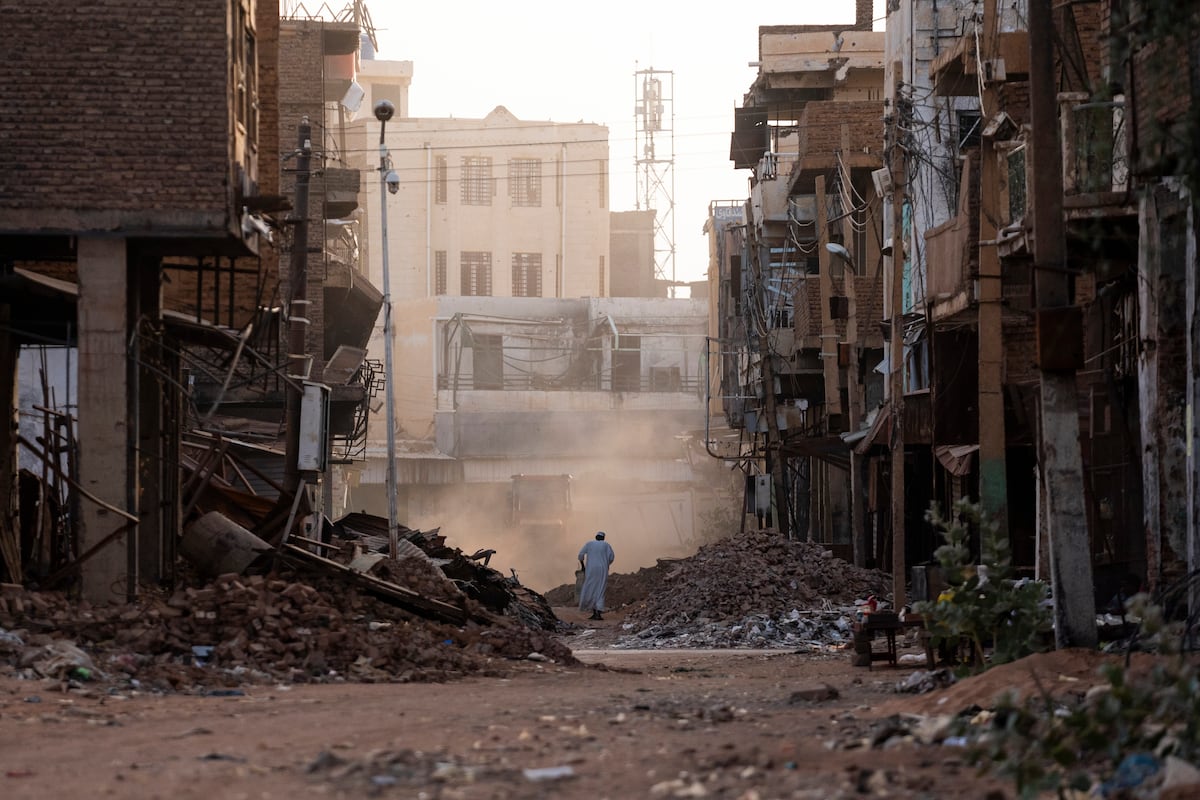
"It's like a ghost town, said the UN humanitarian coordinator in Sudan, Denise Brown, in an interview with EL PAIS. We don't know for sure how many people were left behind at El Fasher. There are missing people. Where are they? They may be dead, they may be detained, they may be injured. Sooner or later, we will have to do a triangulation."
"The team that entered El Fasher spent only two hours inside the city, visiting just a small area due it being believed parts of the town are strewn with unexploded ordnance. Their priority was the area around the Saudi Hospital, the only medical facility, run by civilian and military teams, that was operational until the fall of the city. When El Fasher fell on October 26, the paramilitaries killed more than 460 people in this hospital, including patients and visitors."
"What they found was a destroyed and deserted city as well as abandoned villages nearby, triggering serious concerns for the civilians who remain there and for those missing. In August, the UN estimated the town's population at around 260,000 people, of whom about 100,000 fled after the RSF seized the site. So far, no one has been able to confirm the whereabouts or wellbeing of tens of thousands of missing residents."
El Fasher was seized by the paramilitary Rapid Support Forces (RSF) in October, followed by one of the worst massacres of the Sudanese war. The city and nearby villages were found destroyed and deserted, with thousands displaced and tens of thousands unaccounted for. A UN team spent two hours inside the city, prioritizing the area around the Saudi Hospital, where paramilitaries killed more than 460 people, including patients and visitors. Satellite images identified piles of objects that could be corpses and reddish marks on the ground. Concerns persist about unexploded ordnance, detained or deceased missing residents, and severe humanitarian needs.
Read at english.elpais.com
Unable to calculate read time
Collection
[
|
...
]