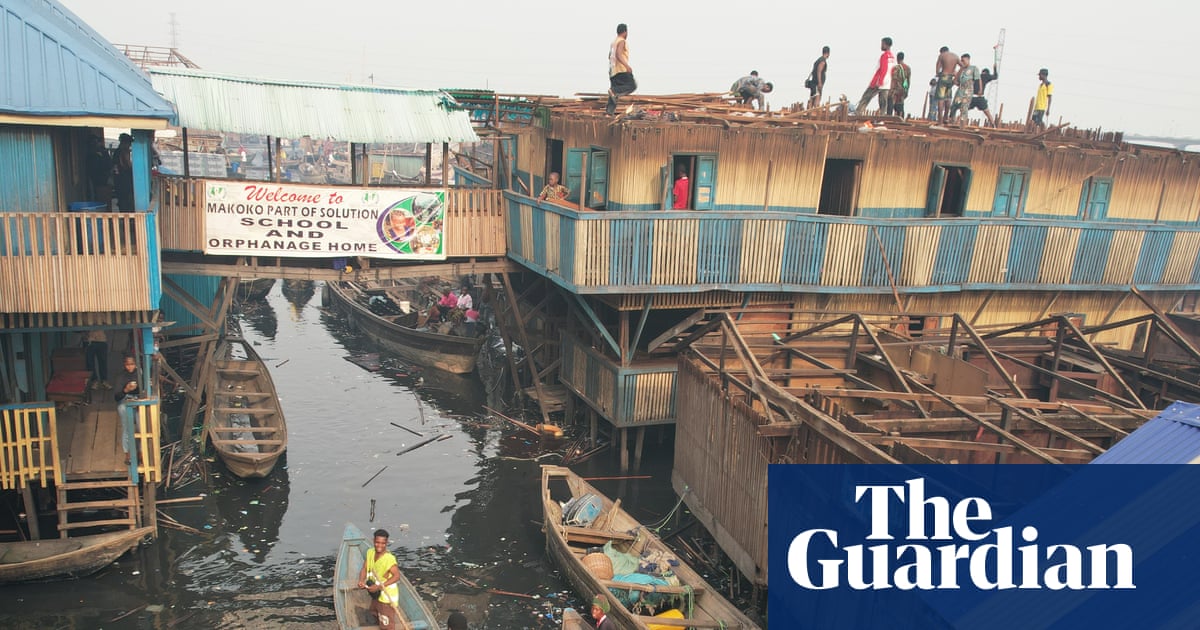
"It was 12.30pm when amphibious excavators escorted by armed police roared through Makoko, crushing wooden shacks built on stilts. It was the second time this year, says Augustine Agpoko, 42, a fisher and father of eight whose six-bedroom bungalow was demolished on 16 January. Like many of his neighbours, Agpoko was already dismantling his home piece by piece in an attempt to save some of the materials before the machines arrived."
"I was removing my roofing sheets, trying to salvage materials from my house when the bulldozers began demolition, he says. When they started firing tear gas into the air, I had to quickly evacuate my family to safety in a neighbouring community, because one of my two wives is in her second trimester. By the time he returned, everything had been reduced to floating debris on the Lagos Lagoon. They later set everything ablaze, including my fishing nets, he says."
"During an operation on 21 December the excavators arrived under cover of darkness. At first, Makoko residents thought the low metallic hum vibrating across the lagoon was a distant generator or the rumbling of trucks on the nearby Third Mainland Bridge. But when the sky began to brighten, they saw excavators advancing towards the wooden structures of the waterfront settlement."
Amphibious excavators escorted by armed police demolished wooden shacks in Makoko, crushing homes and burning debris on the Lagos Lagoon. Residents attempted to salvage roofing sheets and belongings but faced tear gas and forced evacuations, including protecting pregnant family members. Demolitions occurred in December and again on 16 January, destroying a six-bedroom bungalow and fishing nets, and disrupting schooling for children. Makoko is an informal waterfront settlement of up to 300,000 people, built on stilts and shaped by fishing, canoe transport and lagoon trade. Excavators sometimes arrived under cover of darkness, approaching before dawn and surprising residents.
Read at www.theguardian.com
Unable to calculate read time
Collection
[
|
...
]