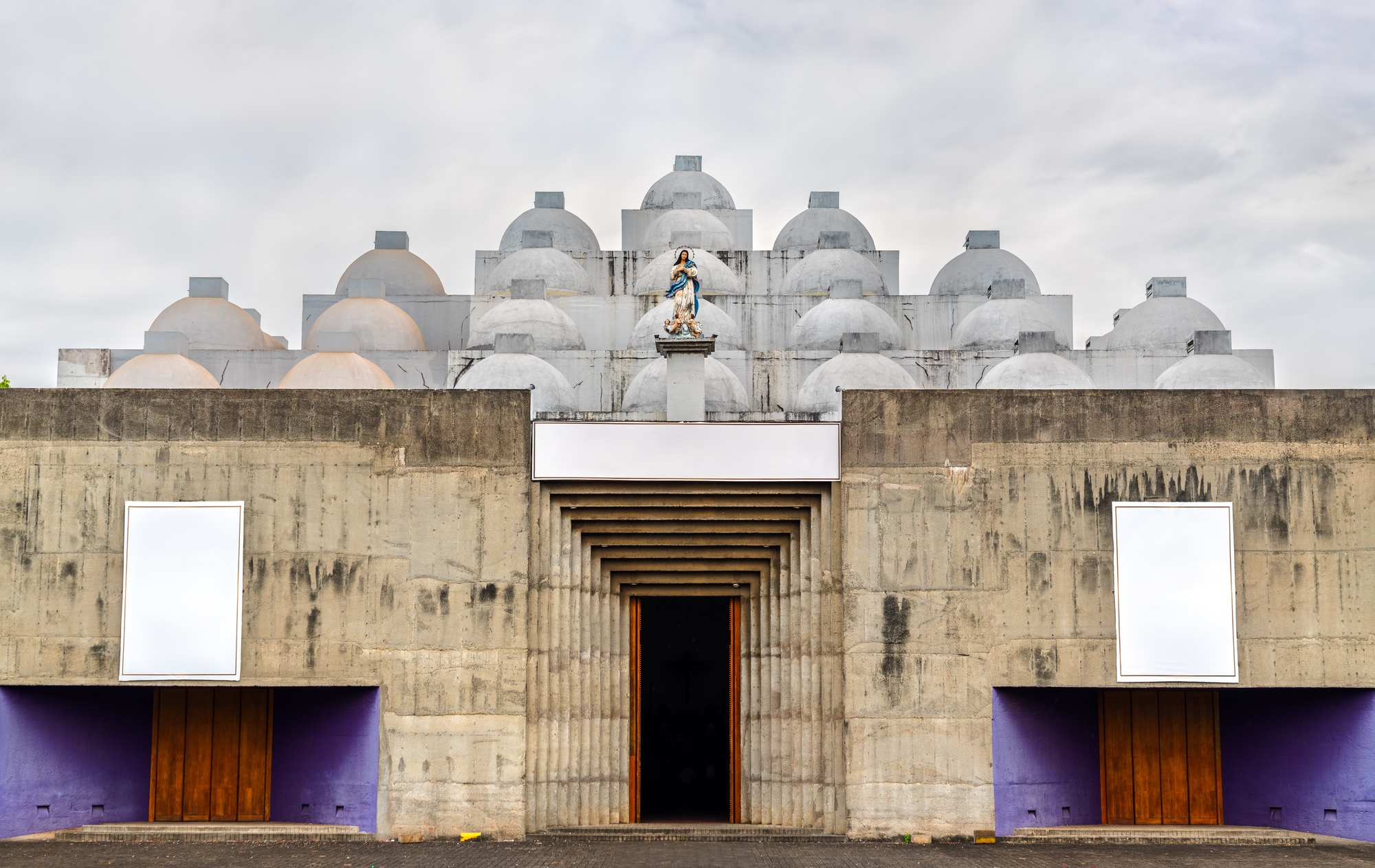
"On December 23, 1972, Managua, the capital of Nicaragua, was struck by a 6.3-magnitude earthquake. In a matter of minutes, its urban core, which for decades had functioned as a compact political and economic center, abruptly collapsed. In the reconstruction process that followed, the authorities sought not simply to rebuild but to reorganize. Their objective was to decentralize the city and prevent future paralysis by dispersing functions across multiple zones."
"By the late nineteenth century, the city had consolidated national prominence and developed into a thriving administrative center. However, its urban trajectory would be repeatedly interrupted by seismic disasters. The first major rupture occurred with the 1931 earthquake, which destroyed much of the city. Reconstruction efforts, however, did not alter its underlying urban logic. Managua was rebuilt according to the traditional Spanish urban model: a dense orthogonal grid organized around a central plaza, and anchored by a church."
On December 23, 1972, a 6.3-magnitude earthquake destroyed Managua's urban core, collapsing decades of centralized political and economic infrastructure. Reconstruction prioritized not simply rebuilding but reorganizing the city through decentralization and dispersal of functions across multiple zones to avoid future paralysis. A major architectural result was a modernist Metropolitan Cathedral that conveyed institutional continuity while signaling urban transformation toward a decentralized metropolis. Managua had become capital in 1855 as a compromise between León and Granada because of its intermediate location. The city repeatedly faced seismic ruptures, notably the 1931 earthquake, after which reconstruction retained the traditional Spanish orthogonal grid centered on a plaza and church.
Read at ArchDaily
Unable to calculate read time
Collection
[
|
...
]