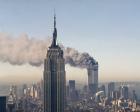
"As it turned out, both were wrong. The 21st century began in earnest, at least in the western mind, on a day that no one had circled in their diaries. Out of a clear blue sky, two passenger jets flew into the twin towers of the World Trade Center on 11 September 2001 and so inaugurated a new age of anxiety a period in which we have lived ever since."
"The historian Eric Hobsbawm had already spoken of the short 20th century, which ran from the start of the first world war in 1914 to the fall of the Berlin Wall in 1989. It was followed by the long decade of the 90s, which came to resemble a contented pause, a holiday from history, until it was rudely terminated on that bright New York morning. The sight of it is still shocking."
"Nearly 25 years later, the portrait of an ash-covered sculpture, depicting a businessman and his briefcase, is as unsettling now as when it first appeared. Never mind that he was always a statue. The frozen Manhattan man, intact while everything around him lies in ruins, could be one of the petrified figures of Pompeii, a fully preserved emissary from a previous world: the world before 9/11."
At the turn of the century, people debated whether the new millennium began on 1 January 2000 or a year later. That technical question proved secondary when two passenger jets struck the World Trade Center on 11 September 2001, unexpectedly inaugurating a sustained era of anxiety. Eric Hobsbawm's periodization described a short 20th century followed by a peaceful 1990s that ended abruptly in New York. The ash-covered sculpture of a businessman became an enduring image of the pre-9/11 world. The US response, led by President George W. Bush, launched a global 'war on terror,' including long military campaigns in Afghanistan and Iraq.
Read at www.theguardian.com
Unable to calculate read time
Collection
[
|
...
]