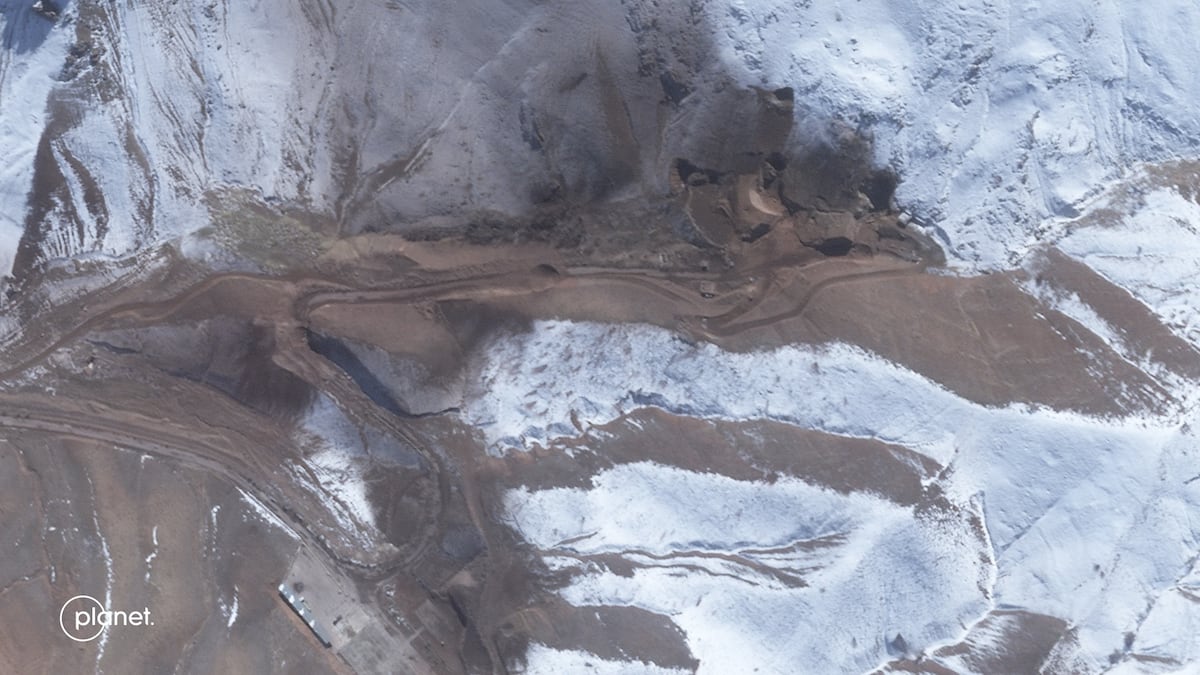
"Iran possesses one of the largest missile arsenals in the Middle East, with more than 3,000 ballistic missiles, according to a 2022 estimate by the U.S. Central Command. Over the past decade, the country has also improved one of the main shortcomings of these Iranian projectiles: their accuracy."
"With its skies defenseless due to its lack of modern fighter jets and with its air defenses decimated by the 12 days of strikes in June, this arsenal is key to Tehran's conventional response to Israeli and U.S. attacks."
"Iran has built so-called missile cities or missile cities in recent years—underground bases excavated in the mountains of Iran at great depths, even 500 meters below ground. These facilities, scattered throughout the country, can house long-range missiles such as the Shahab-3, or the Sejil and Khorramshahr models, with ranges of up to 1,242 miles (2,000 km)."
Iran maintains one of the Middle East's largest missile arsenals with more than 3,000 ballistic missiles, having significantly improved their accuracy over the past decade. The country's conventional weaponry serves as a critical defensive tool, particularly given its lack of modern fighter jets and decimated air defenses following Israeli strikes. Iran has constructed underground missile bases, known as missile cities, excavated deep into mountains at depths reaching 500 meters to protect long-range missiles like the Shahab-3, Sejil, and Khorramshahr models with ranges up to 2,000 kilometers. These dispersed facilities are controlled by the Islamic Revolutionary Guard Corps Aerospace Force and represent Iran's strategic response to regional threats.
#iranian-ballistic-missiles #middle-east-military-capabilities #underground-missile-bases #air-defense-systems #regional-security-threats
Read at english.elpais.com
Unable to calculate read time
Collection
[
|
...
]