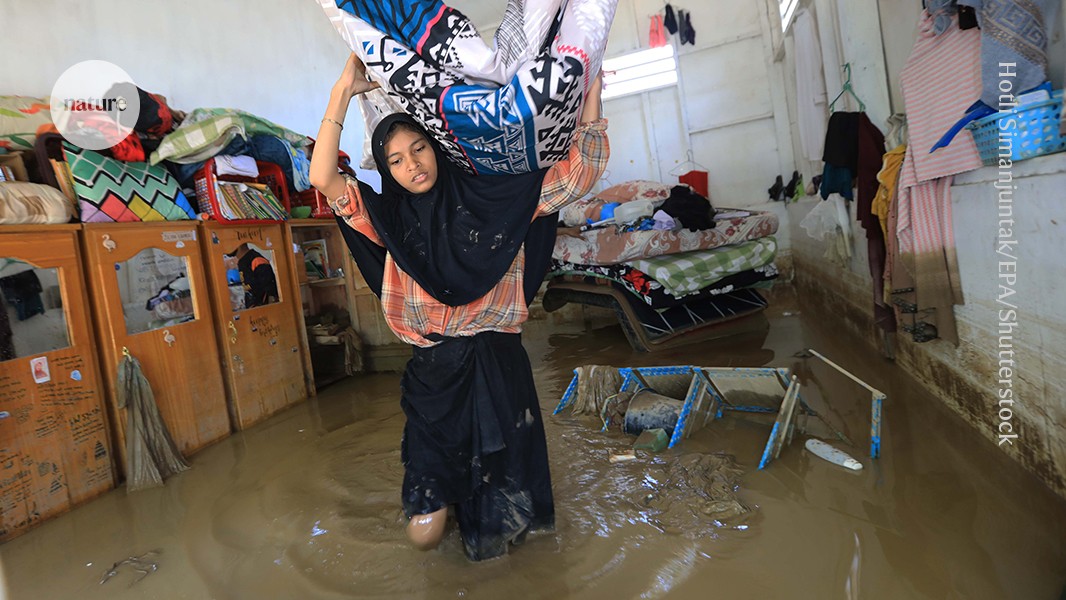
"In late November, three tropical cyclones - Senyar, Ditwah and Koto - devastated cities and villages in countries around the Indian Ocean. In Indonesia's Sumatra, Malaysia, Vietnam, Thailand, India's Andaman and Nicobar Islands, the Philippines and Sri Lanka, torrential rains, high winds, landslides and flash floods killed at least 1,000 people, buried homes beneath metres of mud and destroyed roads and bridges."
"The storms' destructive scale is close to that of the 2004 Indian Ocean tsunami, as Muzakir Manaf, the governor of Aceh, Indonesia, said in a statement. However, the world has mostly overlooked this emergency. Millions of people have been displaced, and many are sick or starving, yet aid has been slow to arrive. Few people have recognized the cyclones' unusual nature and what they herald for the world's future."
"The rainfall was so intense that it created 'a rough sea on the land', as my friend in the Sumatran city of Langsa told me before we lost contact. One week of non-stop deluges induced a powerful tsunami-like river current that washed away concrete bridges, dragged giant timber trees from encroached forests and inundated people in their homes. But with these horrifying scenes also comes frustration. Some countries, such as Sri Lanka, have declared a national emergency and asked for international help. Others, including Indonesia, have not even acknowledged that this is a crisis. Indonesia's President Prabowo Subianto held his first cabinet meeting about the disaster on 27 November, ten days after the first heavy rains and landslides in North Sumatra. As this article went to press, the government has still not declared a national emergency. I'm baffled by the slow response. Many villages and cities in West Sumatra, North Sumatra and Aceh are disconnected from the rest of the world. Food is scarce and prices are soaring; hospitals have collapsed. Local governments have sent some aid, but damaged infrastructure has hampered the process."
Three tropical cyclones—Senyar, Ditwah and Koto—struck countries around the Indian Ocean, bringing torrential rains, high winds, landslides and flash floods that killed at least 1,000 people, buried homes beneath metres of mud and destroyed roads and bridges. The storms produced powerful, tsunami-like river currents that washed away infrastructure and forests. Millions have been displaced, with widespread shortages of food, collapsing hospitals and rising prices. Aid and government responses have been uneven and slow, and damaged infrastructure and disconnected communities continue to hinder humanitarian relief and public-health efforts.
Read at Nature
Unable to calculate read time
Collection
[
|
...
]