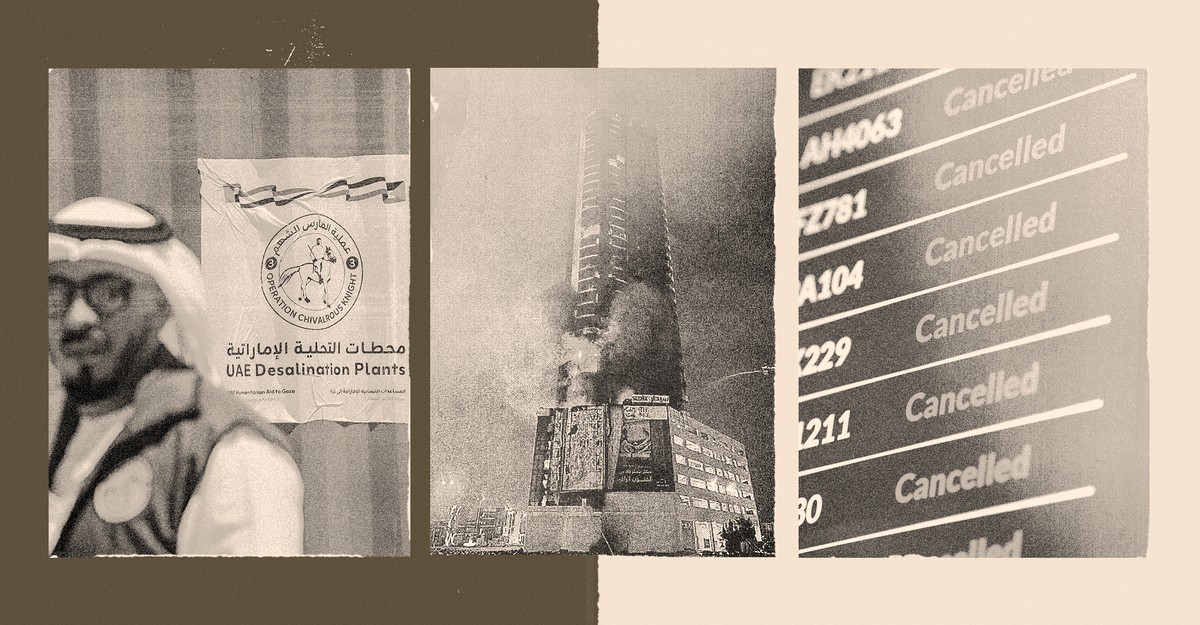
"The risks to the UAE, Saudi Arabia, Qatar, Bahrain, and Kuwait go beyond interrupted oil and gas sales: In an arid region with few other resources, everyone is dependent on a daily influx of food and desalinated water along supply routes and pipelines that could be struck from the air."
"The Gulf has transformed in the past half century from a sparsely populated desert into a postmodern hub of migration and commerce with some 60 million residents. All of that prosperity rested on the slender premise that Iran would never do what it is doing now."
"But even a trickle of drone strikes, if they continue for months, could damage the Gulf's brand as a haven within a volatile region."
Iranian missile strikes over the Persian Gulf prompted regional leaders to publicly downplay security concerns while privately acknowledging serious risks. The UAE, Saudi Arabia, Qatar, Bahrain, and Kuwait face threats beyond oil disruptions—their arid geography makes them dependent on imported food and desalinated water through vulnerable supply routes and pipelines. The region's transformation from desert to a 60-million-person commercial hub relied on the assumption Iran would not attack. While missile numbers have decreased due to American and Israeli efforts, continued drone strikes could damage the Gulf's reputation as a stable investment destination and undermine long-term economic confidence.
#iranian-missile-attacks #persian-gulf-security #regional-infrastructure-vulnerability #economic-impact-and-investor-confidence
Read at The Atlantic
Unable to calculate read time
Collection
[
|
...
]