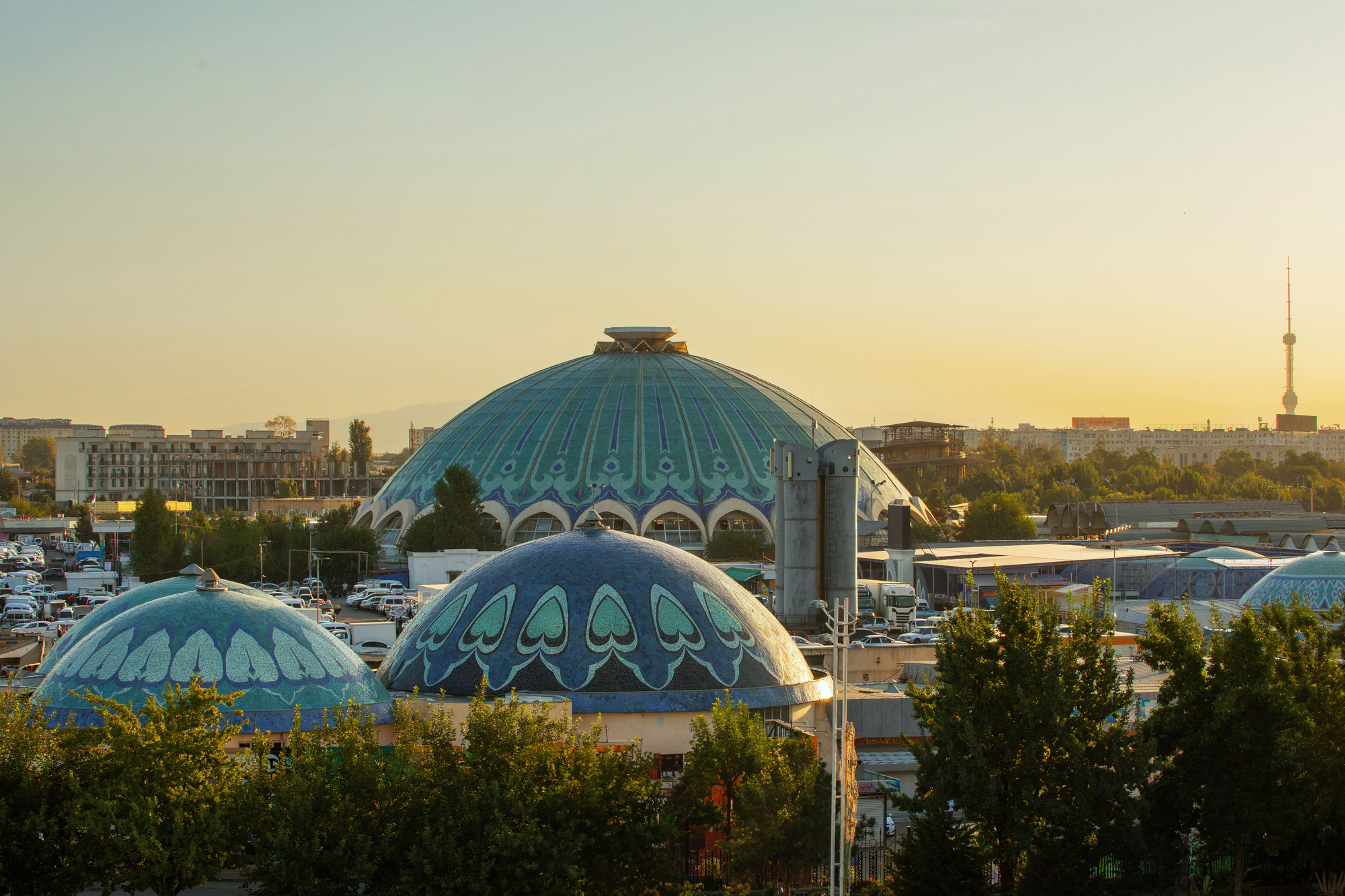
"Its historic architecture is known for its courtyards, domes, and blue ceramics, typical of its Timurid heritage. The capital of Uzbekistan today, it was absorbed into the Russian Empire in the 19th century, before becoming a Soviet republic. While part of the Soviet Union, the city became an example of modernization, celebrating socialist achievements in Asia. A devastating earthquake in 1966 accelerated this modernization as the city was reconstructed, leading to many of the modernist monuments for which Tashkent is known today."
"Efforts to rebuild after the earthquake attracted architects and specialists from various regions of the USSR. The plan for the city involved key layout strategies arranged along two main axes. A governmental core was situated at the intersection, while cultural buildings extended to the east and west. Thus, the new Modernist buildings were intended to be placed on prominent points in the city. Furthermore, their forms and functionality were designed to connect them to their contexts."
Tashkent's urban fabric reflects millennia of history and Timurid architectural traditions, including courtyards, domes, and blue ceramics. Russian imperial control in the 19th century and later Soviet incorporation transformed the city into a showcase of socialist modernization. The 1966 earthquake prompted large-scale reconstruction led by architects from across the USSR and established two main urban axes with a governmental core and culturally oriented precincts. Modernist buildings were sited on prominent points and oriented toward public squares to encourage collective life. The rebuilt architecture combined Modernist technology and bold forms with Central Asian ornamentation, climatic adaptation, and cultural patterning.
Read at ArchDaily
Unable to calculate read time
Collection
[
|
...
]