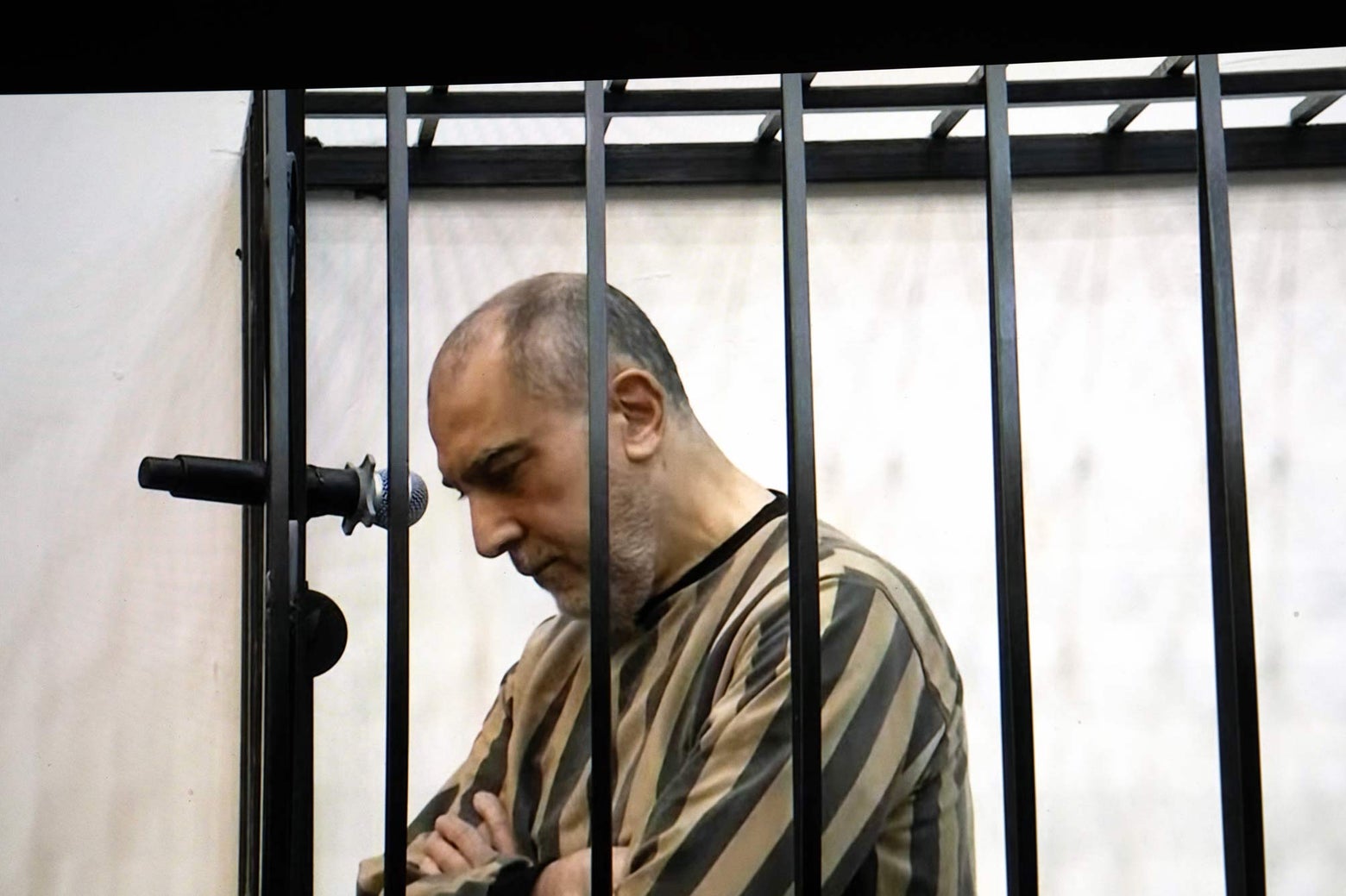
Security forces in Syria have arrested multiple senior figures from the former Assad regime over alleged responsibility for major atrocities. Arrests include a general accused of orchestrating the 2013 sarin attack on Eastern Ghouta, an air force chief of staff linked to chemical weapons attacks, a long-serving head of military affairs, and an intelligence officer accused of leading the 2013 Tadamon massacre. The arrests were announced through social media and Syrian television. They coincided with the opening of a trial for Atef Najib, known for violent torture of young Assad opponents and for his role as security chief in Daraa. Najib appeared in court shackled in a metal cage after charges were read, including allegations tied to arrests and torture of schoolchildren and subsequent unrest.
"In the past six weeks, security forces have arrested Adnan Abboud Hilweh, a general accused of orchestrating the 2013 sarin attack on Eastern Ghouta; Jayez al-Moussa, Assad's air force chief of staff and an EU-sanctioned figure tied to chemical weapons attacks; Major General Wajih Ali al-Abdullah, who ran Assad's brutal military affairs office for 13 years; and Amjad Yousef, the intelligence officer accused of leading the 2013 Tadamon massacre, in which at least 41 civilians were marched into a pit and shot, documented on video by the killers at the time."
"The arrests were announced in a blizzard of social media posts and on Syrian TV. The names are well known to most Syrians, the "big fish" of a brutal system of repression. The arrests also coincided with the opening of the trial for Atef Najib, a symbolic first choice because he's known as the man whose violent torture of young Assad opponents helped sparked the 2011 uprising that led to his downfall more than a decade later."
"On May 10 in a Damascus courtroom, Atef Najib, Assad's cousin, sat shackled in a metal cage dressed in a drab striped prison uniform. He was the security chief in the southern province of Daraa when schoolchildren were arrested and tortured for writing anti-Assad graffiti on the walls at their schools. They were jailed for 45 days, and by the time they were released, Daraa had weekly demonstrations that soon spread to the rest of the country."
Read at Slate Magazine
Unable to calculate read time
Collection
[
|
...
]