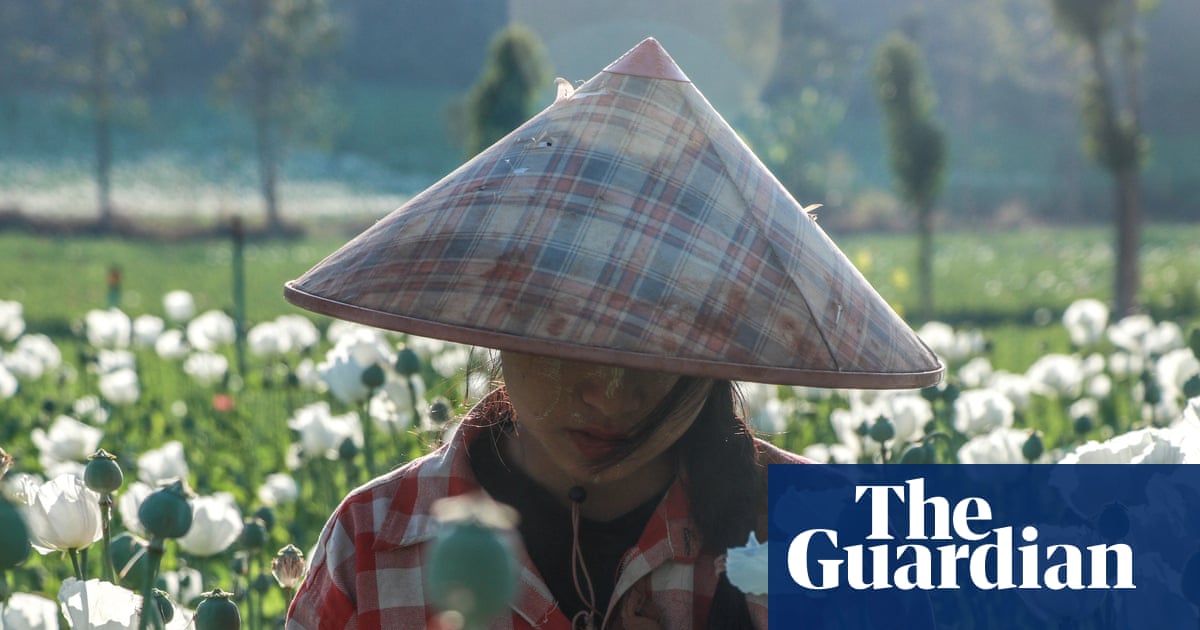
Opium poppy cultivation in Myanmar increased 17% to 53,100 hectares, up from 45,200 hectares in 2024, reaching a decade high. The UN Office on Drugs and Crime (UNODC) identifies Myanmar as the world’s main known source of illicit opium amid declining production in Afghanistan. The rise is driven by conflict, economic hardship, and a doubling of opium prices since 2020, pushing more farmers into the illicit trade. The largest increases occurred in eastern Shan (up 32%) and Chin (up 26%), while southern Shan accounted for 44% of cultivation. Poppy was detected for the first time in Sagaing (552 ha), widening geographic spread and raising concerns along western border areas.
"Opium poppy cultivation in war-torn Myanmar has surged to its highest level in a decade, according to the UN, rising 17% in the past year as conflict and economic hardship push more farmers into the illicit trade. Poppy cultivation climbed to 53,100 hectares this year from 45,200 hectares in 2024, the UN office on drugs and crime (UNODC) said in a report, underlining Myanmar's position as the world's main known source of illicit opium amid declining production in Afghanistan."
"Myanmar stands at a critical moment, Delphine Schantz, UNODC representative for southeast Asia and the Pacific, said in a statement. The major expansion in cultivation shows how far the opium economy has reestablished itself in recent years and indicates the potential for further growth in the future. Myanmar has been in political turmoil since the military seized power in a 2021 coup, ousting a civilian government led by Nobel laureate Aung San Suu Kyi and sparking a nationwide armed resistance."
"After several years of decline, UNODC said its latest findings confirmed a steady increase in opium cultivation since 2020, driven by the price of opium, which has doubled over the same period. The sharpest increases in cultivation were recorded in eastern Shan State, up 32%, and Chin State, up 26%, while southern Shan State remained the core growing area, accounting for 44% of national cultivation."
Read at www.theguardian.com
Unable to calculate read time
Collection
[
|
...
]