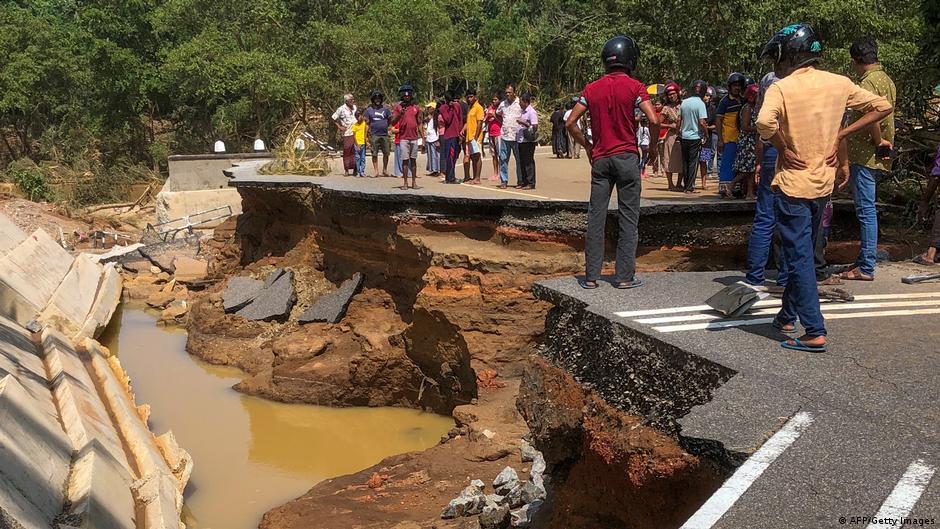
"Cyclone Ditwah has emerged as one of Sri Lanka's worst flooding disasters in decades, claiming over 630 lives and leaving 209 people missing, according to the government's Disaster Management Center. Sri Lanka's newly appointed commissioner general of essential services, Prabath Chandrakeerthi, said the economic loss from Ditwah was estimated to be around $6 billion to $7 billion (5.1 billion to 6 billion), which amounts to three times the economic losses stemming from the 2004 tsunami."
"According to the UNDP, floodwaters inundated 1.1 million hectares (2.7 million acres), nearly 20% of Sri Lanka's total land area. The UNDP reported 720,000 buildings were affected by the flooding, with over 16,000 kilometers (about 10,000 miles) of roads submerged, and over 270 kilometers of railway track damaged. Over 480 bridges were damaged. More than half the exposed population, including 1.2 million women, 522,000 children, and 263,000 elderly people, were already living in vulnerable conditions before the cyclone struck, the UNDP reported."
""After one of its worst economic crises and a slow but steady recovery underway, Sri Lanka cannot shoulder more debt to cover the costs of a rebuild from this massive natural disaster," said Azusa Kubota, UNDP resident representative in Sri Lanka in a statement. Kubota urged international partners to step up with affordable financing and innovative instruments that enable a rapid recovery and rebuilding with greater resilience, without the country falling off the "debt cliff.""
Cyclone Ditwah produced catastrophic flooding across Sri Lanka, causing over 630 deaths and leaving 209 people missing. The government estimated economic losses at $6–7 billion, about three times the 2004 tsunami losses. UNDP satellite analysis found 1.1 million hectares inundated, 720,000 buildings affected, more than 16,000 kilometers of roads submerged, over 270 kilometers of railway damaged, and more than 480 bridges damaged. More than half the exposed population—including 1.2 million women, 522,000 children, and 263,000 elderly—were already vulnerable before the cyclone. UNDP called for affordable international financing and innovative instruments to support resilient recovery without pushing the country into greater debt.
Read at www.dw.com
Unable to calculate read time
Collection
[
|
...
]