May 20 is presented by U.S. and Cuban leaders as a symbol with different meanings. U.S. Secretary of State Marco Rubio links the date to 1902, when the Cuban flag first flew over an independent country, and treats it as an epic birth moment preserved in a photograph. Cuban President Miguel Diaz-Canel credits the date only for planting anti-imperialist sentiment in Cubans, and emphasizes May 20 as the day of U.S. intervention and interference. The historical contest between Washington and Havana continues alongside severe electricity shortages, with available capacity far below demand and blackouts affecting universities, hotels, neighborhoods, and tourism. The same date also coincides with U.S. Department of Justice federal criminal charges against Raul Castro for the 1996 deaths tied to the shooting down of humanitarian planes.
"Almost at the same time on Wednesday morning, U.S. Secretary of State Marco Rubio spoke from Washington while Cuba's president, Miguel Diaz-Canel, spoke from Havana. Both were addressing the people of Cuba. The former highlighted the date, May 20, as the day the Cuban flag flew for the first time over an independent country in 1902, an image preserved in a period photograph that forever enshrined the birth of the republic. The latter, however, said that date should be credited for only one thing: Having planted in Cubans of that era an anti-imperialist sentiment."
"Rubio invoked 1902 as an epic moment, but Diaz-Canel asked the people not to forget that May 20 marks the day of U.S. intervention and interference in Cuba. That has been the narrative between Washington and Havana to this day: two governments wrestling over the meaning of history. At the same hour that Rubio's Spanish-language speech and Diaz-Canel's in the Cuban way message were made public, Cuba's state power company announced that the National Electric System's available capacity was 1,300 MW against a demand of 2,780 MW."
"In other words, a long day of blackouts stretched across the island's sleeping hours, where any republican epic seems to have been swallowed by the chaos of the Revolution. There is no longer a throng of students descending the steps of the imposing University of Havana; the Hotel Nacional does not escape the blackouts; the storied Vedado neighborhood lacks water; and there are not even enough tourists left to take photos outside the Capitolio."
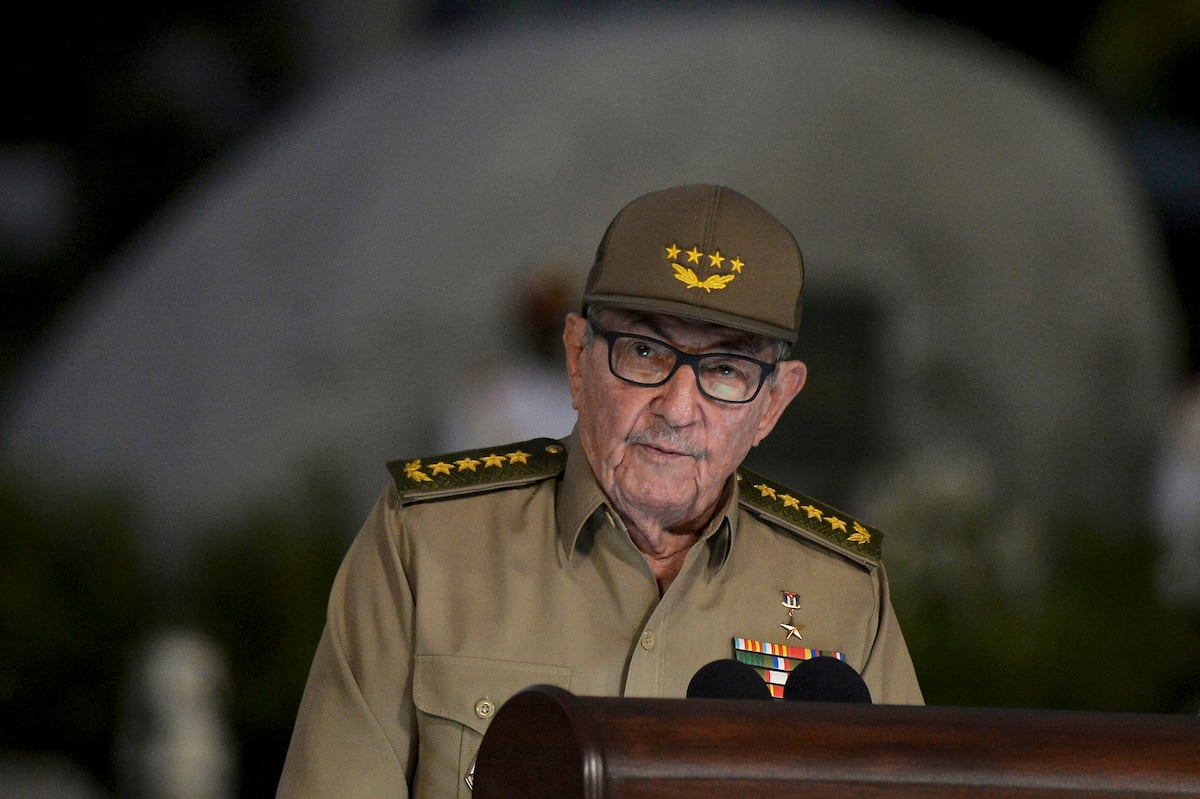
"That same Wednesday, another symbol came to rest on the date of May 20. It was the day chosen by the U.S. government for the Department of Justice to file federal criminal charges against Raul Castro for his responsibility in the deaths of four people after ordering the shooting down of two planes operated by the humanitarian organization Brothers to the Rescue on February 24, 1996. The date drew attention: the same day Castro was charged with c"
Read at english.elpais.com
Unable to calculate read time
Collection
[
|
...
]