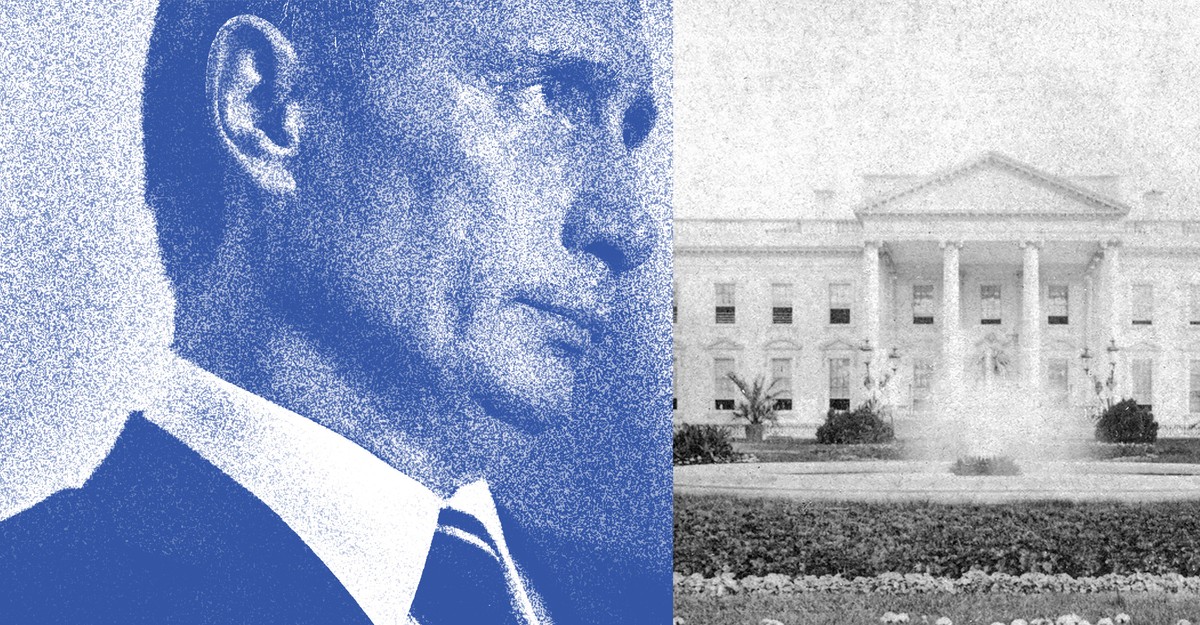
"Now Donald Trump is dismantling the order that Putin had so long abhorred, and a new multipolar world is emerging in its place. Putin had thought he could rise to the top of such a system, in which raw economic and military might outweigh diplomacy and alliances. But he was mistaken: The norms and institutions of the postwar order actually masked Russia's vulnerabilities."
"Moscow had assumed that its immense nuclear arsenal, unparalleled natural resources, and extensive territory in the heart of Eurasia would keep Russia competitive with China and the United States. But these assets have been unable to slow its rapid decline. Russia's economy is at best one-quarter the size of China's and America's, and the gap is growing. Meanwhile, it risks becoming an afterthought in the race for technological supremacy in artificial intelligence, biotechnology, and quantum computing."
A shift away from the U.S.-led postwar order toward a multipolar world has removed restraints that previously concealed Russia's weaknesses. Russia's military and resource advantages have failed to offset an economy roughly one-quarter the size of China's and America's and a lagging technology base, leaving it vulnerable in AI, biotech, and quantum computing. A strategic partnership with China has not compensated for economic decline: trade gains have plateaued, Chinese investment remains minimal, and China can dictate terms on energy and other deals. Limited alternative trading partners amplify Russia's dependency and bargaining weakness.
Read at The Atlantic
Unable to calculate read time
Collection
[
|
...
]