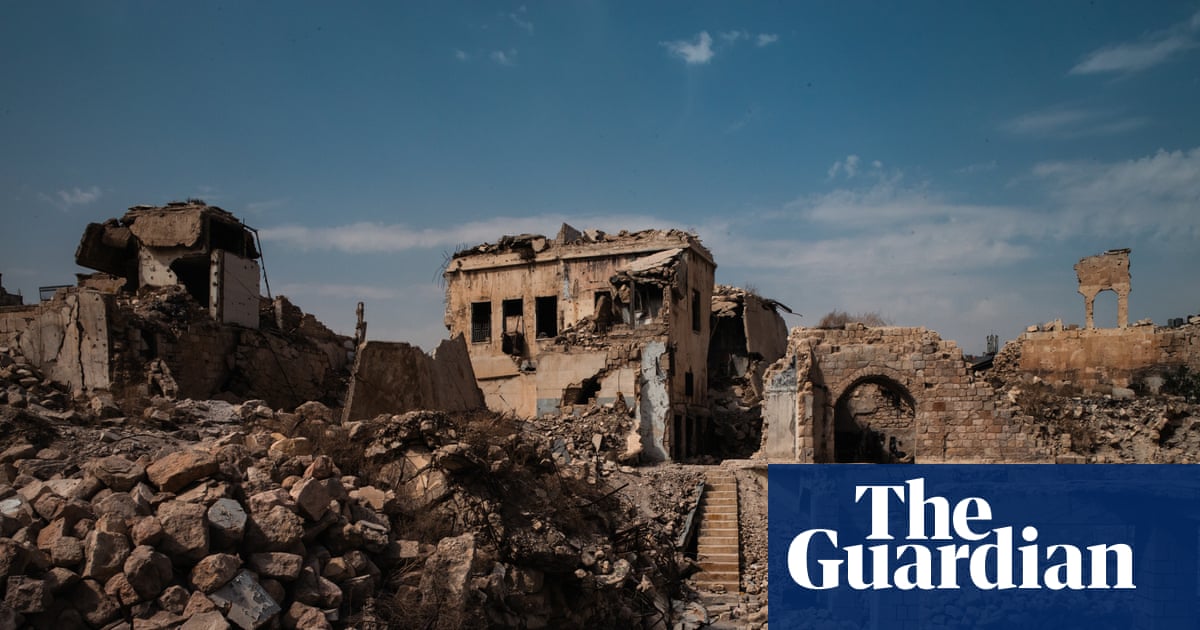
"The kebab stall stood in the shadow of a building whose three upper floors had been sheared in half, leaving behind concrete slabs that seemed to hang in mid-air. Under a tarpaulin, its edges weighted with cinder blocks, stood a thin man with a thick white beard. Smiling, he stoked the fire in a narrow grill. Walking back and forth to a table set atop a wheelbarrow, he tenderly inspected a dish laid out with tomatoes, greens and a few skewers of meat."
"Across Syria, there are thousands of streets just like this one. A year after Bashar al-Assad fled the country and his regime collapsed, nearly 3 million Syrians have returned from abroad and from the refugee camps in the north. Many drifted back into ghost neighbourhoods, places without water or electricity, where darkness swallowed entire blocks. With housing scarce, inflation soaring and rents massively increasing, many have no choice but to seek shelter in the wreckage of their former homes."
Amiriya's streets are scarred by massive destruction, with upper floors sheared off buildings and concrete slabs hanging mid-air. Residents and vendors have returned, improvising livelihoods amid rubble: a kebab seller grills under a tarpaulin, children play on a rusty motorcycle, a woman sells cigarettes, and a man salvages limestone to reuse in rebuilding. Nearly three million Syrians have returned from abroad and northern camps, often moving into neighbourhoods without water or electricity. With scarce housing, soaring inflation and rising rents, many people are forced to shelter in wrecked homes and rely on salvaged materials and informal commerce to survive.
Read at www.theguardian.com
Unable to calculate read time
Collection
[
|
...
]