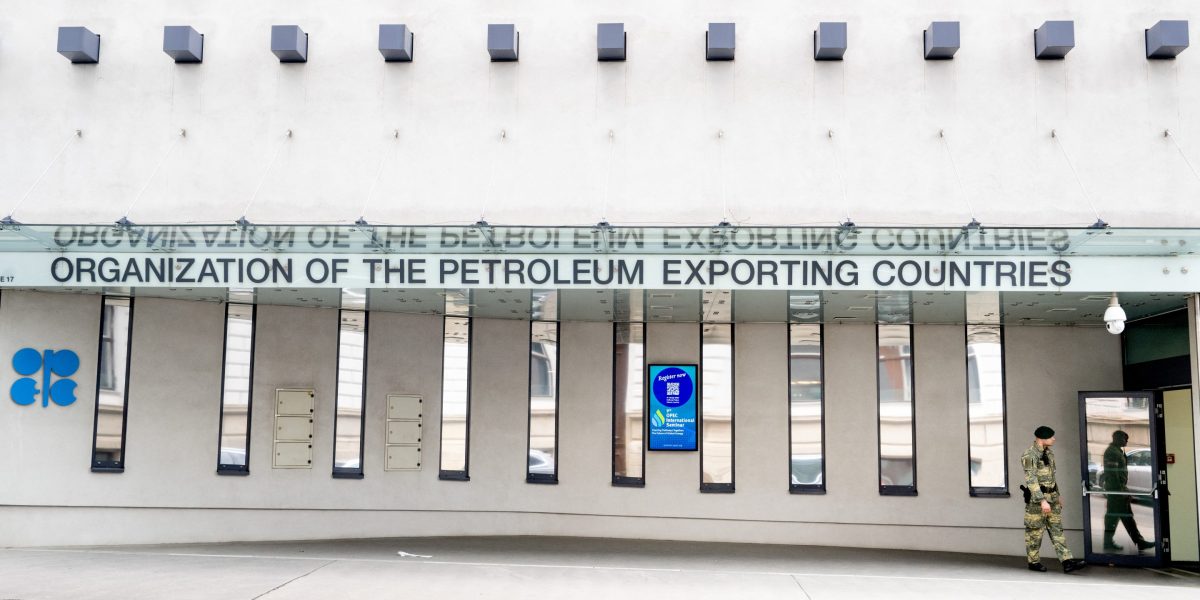
"The group led by Saudi Arabia and Russia was expected to resume modest production increases in April after a three-month supply freeze in an ongoing strategy to reclaim market share, several delegates said earlier this week. Their base-case was to raise by 137,000 barrels a day, in line with increments during the fourth quarter, three people said."
"A key factor in Sunday's decision will be whether the shock US-Israel assault on the Islamic Republic results in a closure of the Persian Gulf's critical Strait of Hormuz, said another. The delegates asked not to be identified as the deliberations are private."
"Saturday's attacks, and Tehran's retaliation against American military bases in the region, mark the culmination of a geopolitical crisis that has pushed up crude prices this year despite widespread expectations of a surplus. Futures rose to a seven-month high of $73 a barrel in London on Friday, having climbed 19% this year amid an array of output disruptions, sanctions and Chinese stockpiling."
OPEC+ is reconsidering its production strategy following military escalation in the Middle East. The group, led by Saudi Arabia and Russia, had planned modest production increases of 137,000 barrels daily starting in April after a three-month freeze. However, US and Israeli attacks on Iran, coupled with Iranian retaliation against American military bases, have prompted consideration of larger supply increases. A critical factor in Sunday's decision is whether the Strait of Hormuz closes, which would significantly impact global oil supply. Crude prices have risen 19% this year to $73 per barrel despite expectations of surplus, driven by geopolitical tensions, output disruptions, and sanctions. Saudi Arabia has already accelerated exports in response to regional tensions.
#opec-production-strategy #middle-east-geopolitical-tensions #oil-price-volatility #iran-us-conflict #global-energy-markets
Read at Fortune
Unable to calculate read time
Collection
[
|
...
]