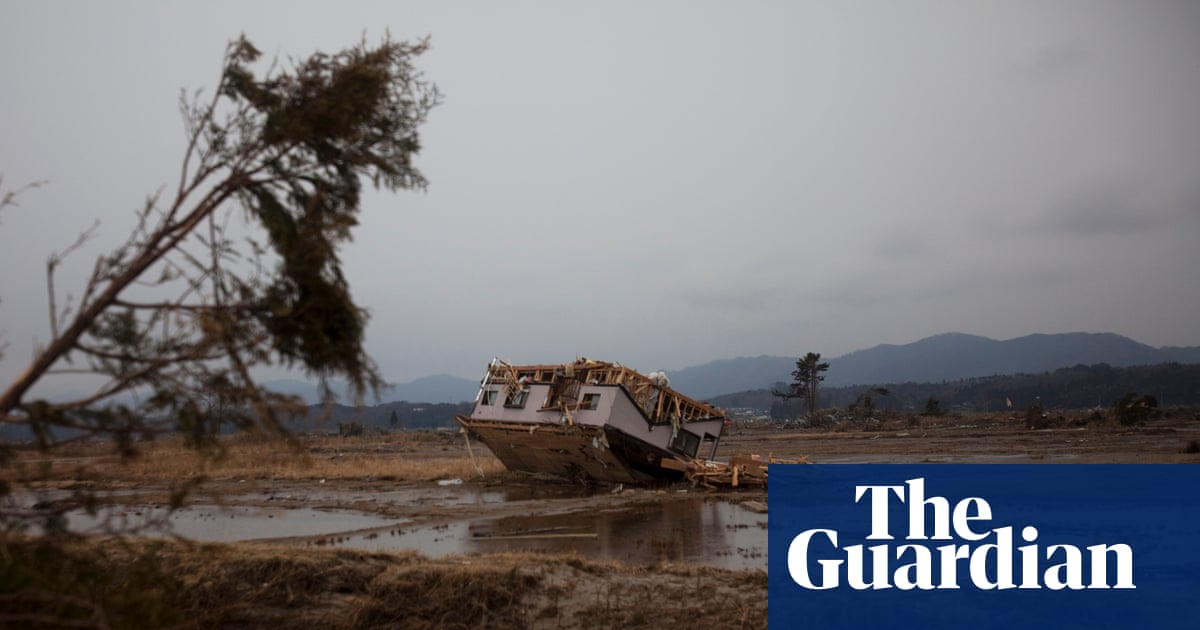
"Fresh analysis of video footage of the Tohoku tsunami revealed that the mud-rich coastline made the tsunami far more destructive than it might otherwise have been. As the wave travelled over mud-rich rice paddies, it changed from a fast-moving, clear-water flow into a thick, gloopy, mud-laden one, exerting considerably more force than its clear-water equivalent."
"The findings indicate that the dense and fast-moving mud-rich flow resulted in greater damage to buildings and significantly higher numbers of injuries and fatalities. This type of flow is similar to destructive mud flows that occur on volcanoes when water mixes with sediment."
"The authors recommend that tsunami hazard assessments be updated to reflect the amplified risk posed by mud-rich coastal settings. This information should be used to inform coastal land use decisions in tsunami-prone regions."
The Tohoku earthquake and tsunami caused nearly 20,000 deaths and triggered the Fukushima disaster. Analysis of video footage revealed that mud-rich coastlines intensified the tsunami's destructiveness. Researchers found that as the tsunami moved over rice paddies, it transformed from a clear-water flow into a dense, mud-laden one, exerting greater force. This resulted in more damage and casualties. The study suggests updating tsunami hazard assessments to account for risks associated with mud-rich coastal areas, influencing land use decisions in vulnerable regions.
Read at www.theguardian.com
Unable to calculate read time
Collection
[
|
...
]