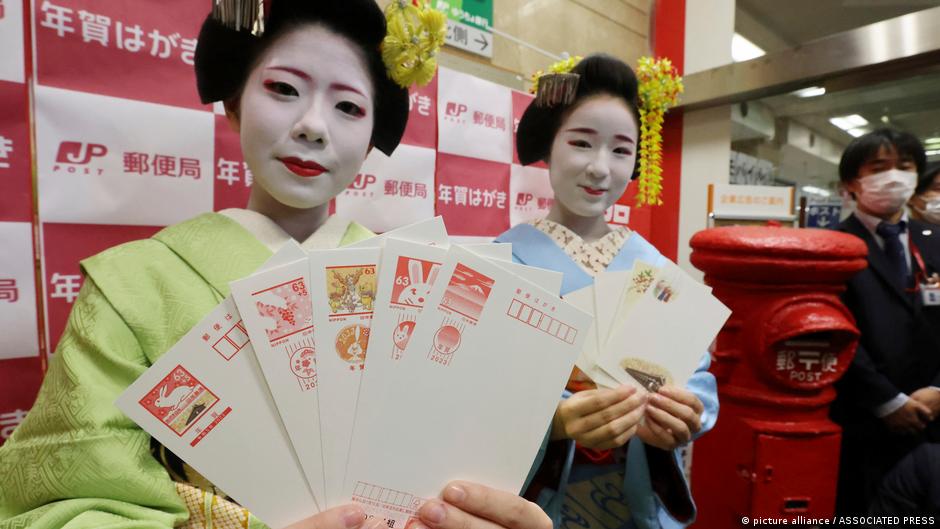
"And while some admit that it is slightly sad to see a staple of the season disappearing, most just shrug. The sending of decorative "nengajo" has been on a steady decline for several decades, falling from a peak of nearly 4.5 billion cards being issued in 2004 to a mere 1.07 billion in 2025. When the figures are released for 2026, they are expected to show that the decline has continued."
""This is the first year that I never sent any 'nengajo' at all," said Sumie Kawakami, an academic who lives in Yamanashi Prefecture in central Japan. "I have been slowly weaning myself off sending cards every year, but this is the first time that I have sent none," she told DW. "I used to conscientiously write and send 200 every year, to colleagues, friends and family, but times have changed.""
"Kawakami said she felt the obligation to send so many cards even to the most distant of contacts became almost overwhelming at the start of every December. And that was only exacerbated on January 1, the day that cards are delivered, when she found that she had inevitably forgotten to send a card to someone. And while tradition dictates that in such an emergency it is still socially acceptable to quickly dash one off and get it in the post so it arrives within the next day or so, it is still something of a faux pas."
The sending of decorative nengajo New Year cards in Japan has fallen sharply from nearly 4.5 billion issued in 2004 to 1.07 billion in 2025, with 2026 figures expected to show further decline. Many people increasingly rely on technology, social media messages, phone calls and occasional letters instead of mass card-sending. Long-standing social expectations to send cards to distant contacts created an overwhelming December obligation for senders. Some people now limit cards to close contacts or skip them entirely; others consider late-posted cards a minor faux pas but still sometimes acceptable in emergencies.
Read at www.dw.com
Unable to calculate read time
Collection
[
|
...
]