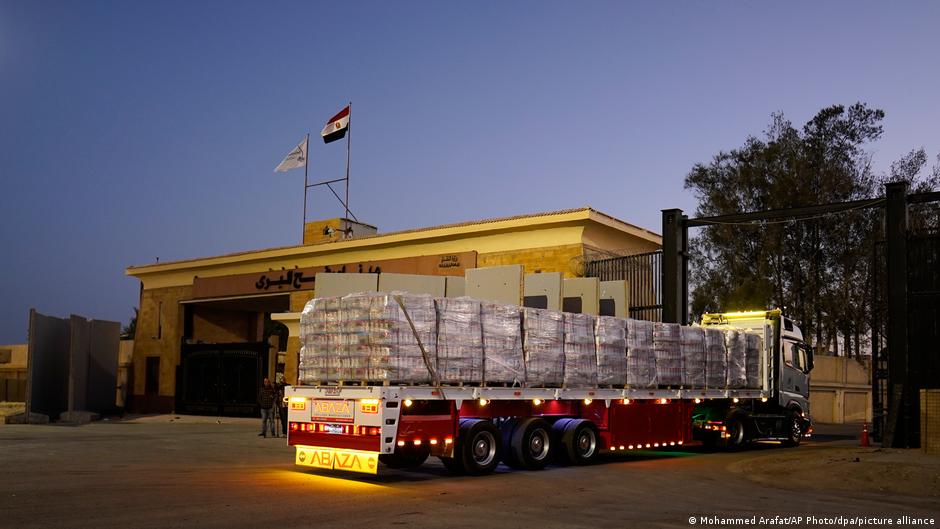
"Many Palestinians in the devastated Gaza Strip have been waiting for the opening of the Rafah crossing with Egypt at Gaza's southern end. In the past, the crossing was Gaza's lifeline to the outside world, an access point that wasn't entirely controlled by Israel. In May 2024, the Israeli military seized control of the crossing and closed the Gaza side of it, except for rare medical evacuations. It is expected to reopen after Israel announced on Monday that the remains of the final deceased hostage in Gaza, Ran Gvili, had been recovered."
"This news is important to show people in Gaza that some progress is being made, said Mustafa Ibrahim, a political analyst in Gaza City. To view this video please enable JavaScript, and consider upgrading to a web browser that supports HTML5 video "The crossing needs to be opened so people feel change and transition," Ibrahim told DW. "Israel still allows only limited aid trucks; people stranded outside Gaza want to return, thousands of wounded and sick desperately need to travel abroad for treatment.""
"After more than two years of devastating war that, according to Hamas health authorities, killed more than 70,000 people in the Palestinian territory, it's a welcome sign that there is some change. The small territory has been under a strict closure and people can't freely decide when they want to leave or come back."
The Rafah crossing with Egypt has been closed on the Gaza side since May 2024 after Israeli forces seized control, with only rare medical evacuations permitted. The crossing is expected to reopen after Israel recovered the remains of the final deceased hostage, Ran Gvili. Local analysts say reopening would show tangible progress, allow stranded people to return, and enable thousands of wounded and sick to travel for treatment. The reopening forms part of the next steps in the second phase of a US-brokered ceasefire deal. Gaza has faced a strict closure and severe casualties during more than two years of conflict.
Read at www.dw.com
Unable to calculate read time
Collection
[
|
...
]