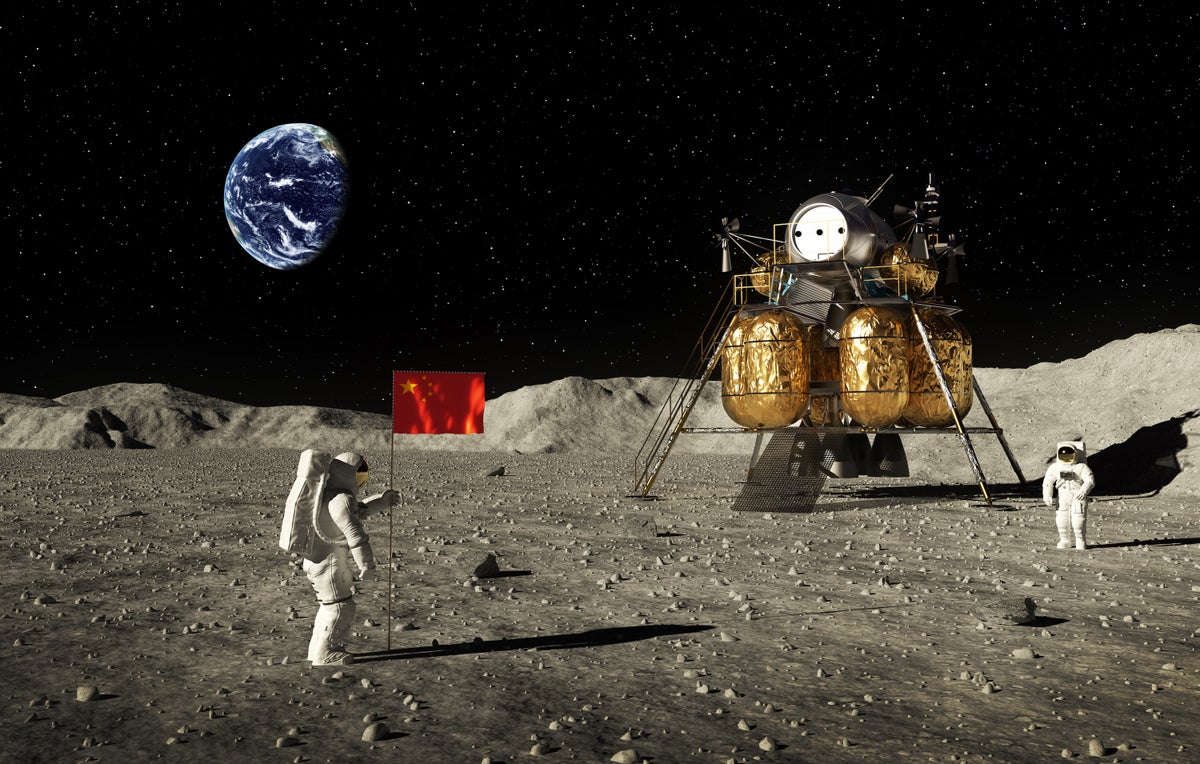
The lunar south pole, rich in water ice and sunlight exposure, represents the most valuable landing destination for establishing lunar bases. However, its extreme terrain and communication challenges make it difficult to access. NASA's Artemis program has selected nine candidate sites there for a 2028 landing attempt. Meanwhile, new research suggests China is pursuing a strategically different approach, targeting Rimae Bode, a flatter region on the moon's near side closer to the equator. This location offers easier accessibility and direct Earth communication while still providing scientific value. The study, analyzing data from multiple lunar missions, indicates China aims to land crewed astronauts by 2030 at this more favorable site.
"The area is relatively resource-rich, pocked with dark craters that harbor water ice and have near constant exposure to sunlight around their respective rims—both desirable features for lunar bases. The South Pole-Aitken Basin—the moon's largest and oldest impact structure—dominates the region. Situated on the moon's far side, it is shielded from Earth's radio chatter, making it an ideal site for ultrasensitive astronomy observations."
"But this promise comes with considerable peril: compared with other landing sites, the south polar region is harder to reach, and its craters are more treacherous. And without a moon-orbiting relay, the far side is cut off from communicating with Earth."
"Using data from U.S., Chinese, Indian and Japanese lunar missions, as well as archival observations from the ground-based Arecibo radio telescope, the authors argue that Rimae Bode—a relatively flat region north of the equator on the moon's Earth-facing side—is a top locale for China's first moonwalking astronauts."
#lunar-exploration #us-china-space-competition #moon-landing-sites #artemis-program #lunar-south-pole
Read at www.scientificamerican.com
Unable to calculate read time
Collection
[
|
...
]