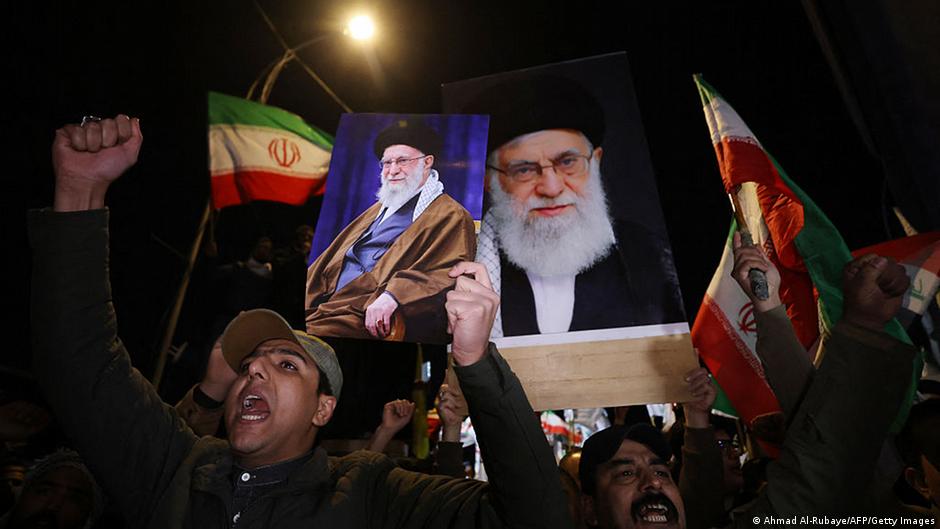
"You can tell that a segment of the Shiite community [in Iraq] views this battle as existential. They see the weakening of Iran as a direct threat to themselves, not only on an emotional level but also in terms of the political power they currently have here. They see any strike against Iran as a strike against them."
"What happened after the dictator Saddam Hussein was removed will be a drop in the ocean compared to what will happen here after the death of Khamenei. What's coming will change the region, maybe even borders. Oh lord, let Iraq get through this safely."
"It is also the only country in the region that has been attacked by both sides in this conflict. Iraq shares an around 1,500 kilometer border with the neighboring country as well as strong commercial, political and military ties."
Iraq faces renewed sectarian tensions as the Iran conflict intensifies, threatening stability similar to post-2003 civil war conditions. Shiite communities perceive threats to Iran as direct threats to their political power and security, while Sunni populations view the conflict as an opportunity to reshape Iraq's political landscape by reducing Iranian influence. These competing perceptions are creating dangerous divisions visible on social media and in public discourse. Iraq's geographic proximity, shared 1,500-kilometer border with Iran, and deep commercial, political, and military ties make it uniquely vulnerable to regional instability. As the conflict continues, Iraq risks becoming a battleground where sectarian rivalries could destabilize the country.
#iraq-sectarian-tensions #iran-iraq-relations #regional-conflict #political-instability #shiite-sunni-divisions
Read at www.dw.com
Unable to calculate read time
Collection
[
|
...
]