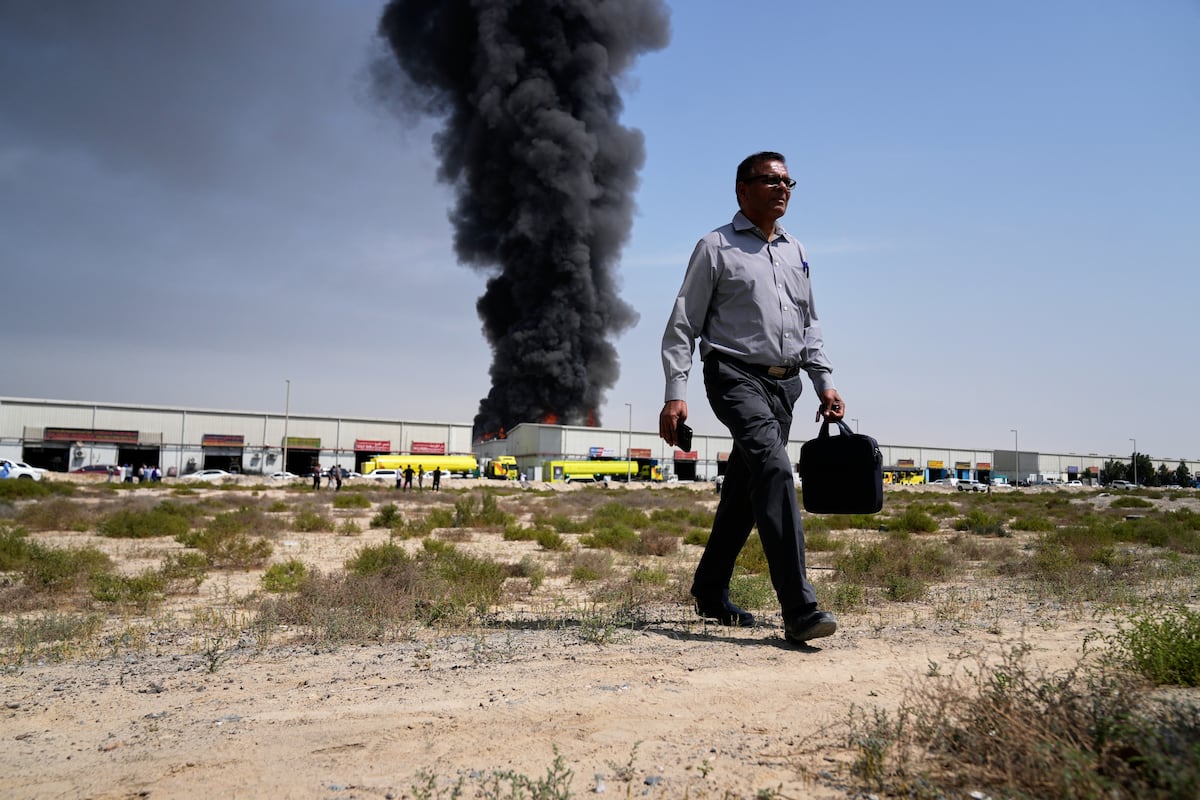
Following a joint Israeli-U.S. military operation, Iran responded with hundreds of missiles and drones targeting not only Israel but also Arab Gulf states hosting U.S. military bases. The attacks continued over two days, with explosions reported near Riyadh, Dubai, Manama, and Doha. Iranian strikes killed at least three people in the UAE, wounded approximately 60, and damaged critical infrastructure including Dubai's commercial port, luxury hotels, and international airports. Air defenses were activated across multiple capitals. Despite Tehran's stated focus on U.S. military targets, significant civilian damage occurred throughout the region. Gulf Arab states found themselves drawn into a conflict they sought to avoid, facing military actors with superior capabilities.
"Amid calls from senior Iranian officials to bury any remaining red lines, the Islamic Republic opted to immediately expand the conflict zone to include states in the region hosting U.S. military bases with an Israeli troop presence, such as southern Syria. These airstrikes against the Persian Gulf countries resumed again on Sunday morning in retaliation for the death of Iran's Supreme Leader, Ali Khamenei, and hundreds of civilians."
"Although Tehran's stated target has been U.S. military interests, its attacks on Gulf Arab states have left a trail of serious civilian damage. In the Emirates, at least three people have been killed and around 60 wounded in attacks that set fire to Dubai's main commercial port and a luxury hotel."
"This aggressive response from Iran has placed the Gulf Arab states in a precarious position, as they are being drawn into a conflict they have tried to avoid by actors with far superior military capabilities and power projection than themselves."
#iran-military-response #middle-east-conflict-escalation #gulf-arab-states #civilian-casualties-and-infrastructure-damage #regional-security-crisis
Read at english.elpais.com
Unable to calculate read time
Collection
[
|
...
]