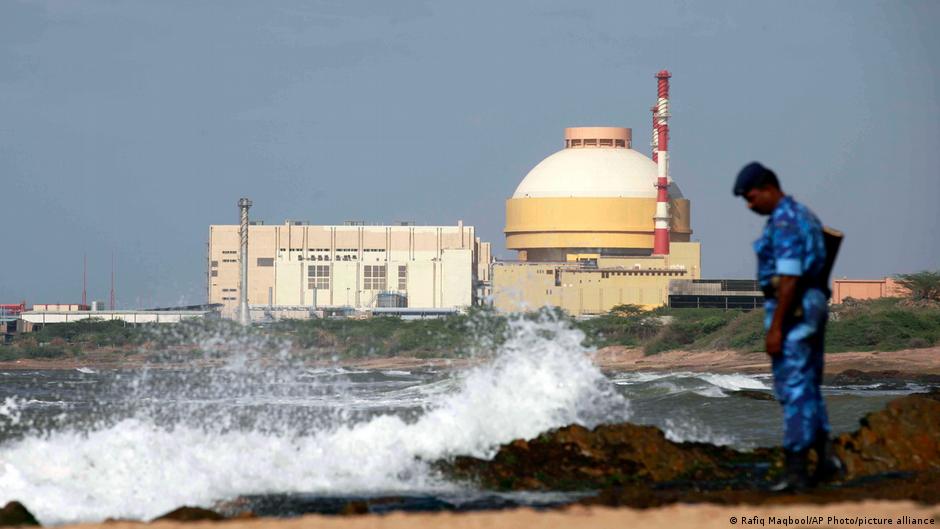
"Last week, India's parliament approved legislation that opens nuclear power generation to private and foreign companies. The landmark Atomic Energy Act marks a significant government shift as India moves towards increased nuclear energy and reduced dependence on fossil fuels in order to meet climate targets. India is seeking to boost its nuclear power capacity tenfold to 100 gigawatts by 2047, which would be enough to power nearly 60 million Indian homes annually and is essential to achieving carbon neutrality by 2070."
"Reaching this target requires around 20 trillion Indian rupees ($226 billion, or 193 billion) in investment that the new legislation aims to unlock from private sources. Indian Prime Minister Narendra Modi said it "marks a transformational moment for our technology landscape" and also opens "numerous opportunities" for the private sector. Major Indian conglomerates, including Tata Power, Adani Power and Reliance Industries, have already signaled their interest in entering the country's tightly controlled civil nuclear power sector."
"Ajay Bisaria, a former Indian envoy to Pakistan, said the legislation removes the legal barriers that kept US and French companies out since 2010, enabling India to diversify beyond Russia. "This reform moves India-US nuclear cooperation from political signaling to commercial reality. Joint statements on large reactors and SMRs [small modular reactors] can now translate into actual projects, with improved Indo-US relations expected in 2026 providing further momentum," Bisaria told DW."
Parliament approved the Atomic Energy Act to allow private and foreign companies to generate civil nuclear power, aiming to expand capacity to 100 GW by 2047. The expansion target would supply nearly 60 million homes and supports a goal of carbon neutrality by 2070. Meeting the target requires about 20 trillion rupees (roughly $226 billion) in investment that the legislation seeks to mobilize from private sources. Major conglomerates have already signaled interest. Experts warn of challenges including liability caps, regulatory oversight, safety standards, licensing timelines, localization requirements, fuel safeguards, financing constraints and regulatory capacity.
#atomic-energy-act #nuclear-expansion #private-and-foreign-investment #safety-and-regulation #indo-us-cooperation
Read at www.dw.com
Unable to calculate read time
Collection
[
|
...
]