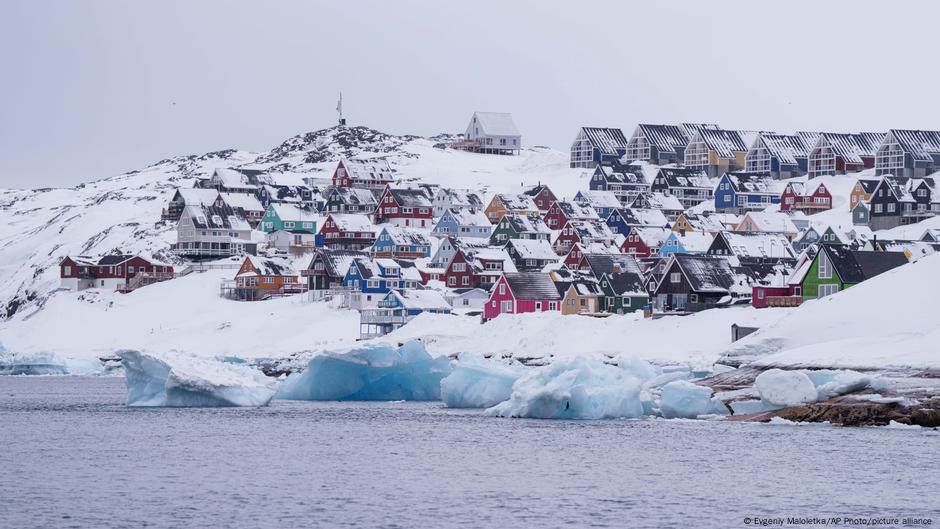
""We need Greenland for national security and even international security. And we're working with everybody involved to try and get it," US President Donald Trump said in a speech to the US Congress on March 4. "One way or the other, we're going to get it." Even on the campaign trail, Trump repeatedly called into question the sovereignty of two Arctic nations, Denmark and Canada. Not only does he want the US to acquire Greenland,"
"a Danish territory a prospect vocally opposed by Copenhagen and the territory's semiautonomous government but he has also floated the idea of Canada becoming a US state. And with tensions rising between other Arctic nations, particularly Russia, what used to be a cooperative relationship between countries in the region has fragmented. Amid a scramble to shore up valuable resource reserves, are the Arctic's relatively peaceful days soon to be a thing of the past?"
Greenland's sovereignty and Arctic strategic importance have returned to international attention after US President Donald Trump publicly suggested acquiring Greenland and questioned Arctic sovereignty. Trump framed Greenland as vital to national and international security and proposed annexation despite opposition from Denmark and Greenland's semiautonomous government; he also floated making Canada a US state. Rising tensions, particularly with Russia, have fragmented formerly cooperative regional relationships. Eight nations lie within the Arctic Circle, with five coastal states holding Exclusive Economic Zones for resource exploitation. The Arctic Council facilitates cooperation among states, Indigenous peoples and observers but lacks regulatory authority.
Read at www.dw.com
Unable to calculate read time
Collection
[
|
...
]