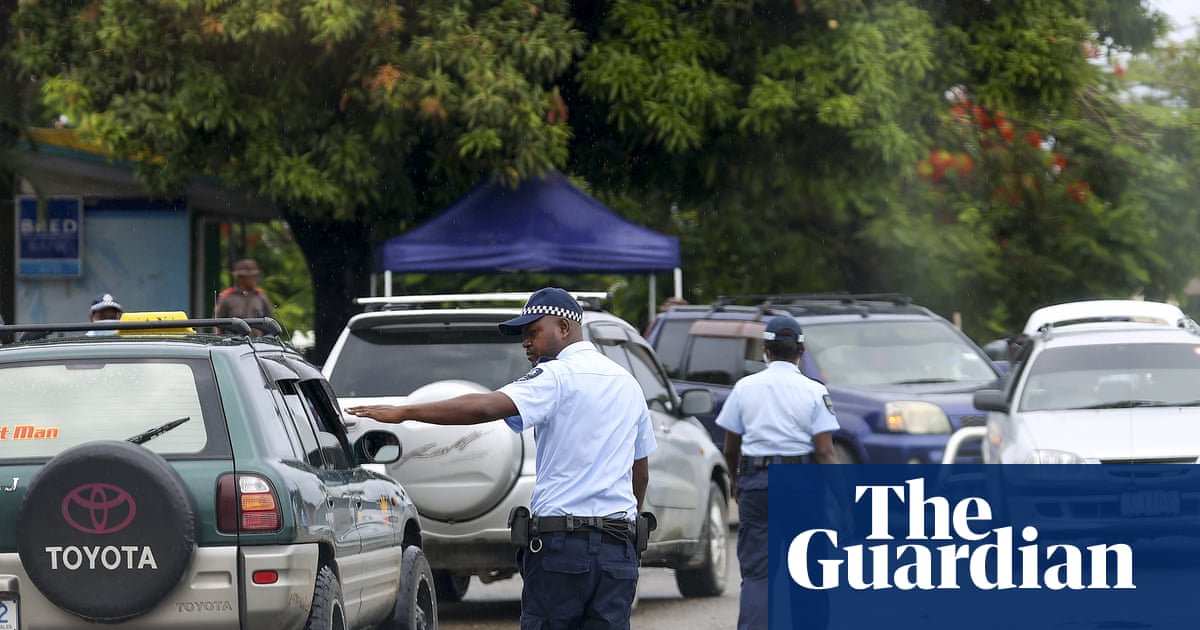
Chinese police conduct training sessions for community leaders in Honiara alongside local officers and supply community goods such as solar lighting, sewing machines, soccer balls and noodle-making lessons. Beijing also provides police equipment including blue uniforms, flashlights and fleets of police cars. These measures build direct community engagement and grassroots influence across the Solomon Islands. Australia has focused on formal partnerships with local police, which generally exclude community leaders. Most disputes are managed by community leaders rather than formal police. The differing approaches reflect competing strategies for influence in the Pacific.
"At a church hall on the outskirts of Honiara, dozens of community leaders gathered for a training session organised by the Chinese police, alongside local Solomon Islands officers. Among them is Ben Angoa, who has enthusiastically embraced the training, as well as other things China has provided: solar lighting, sewing machines, soccer balls, and even noodle-making lessons. We really love China, he says. The sessions along with the provision of blue uniforms, flashlights and fleets of police cars are among the many ways Beijing supports Solomon Islands policing."
"They're also a powerful reminder of the battle for influence, taking place across this strategically important nation; what Australian foreign affairs minister Penny Wong has characterised as the permanent contest to be the partner of choice in the Pacific. For Angoa, the choice is simple. China has impact in the community, he tells the Guardian at the training session in late 2025, and that's something we don't have from our other partners."
"But in the wider country there remain divisions over whose strategies are proving most effective. It's hard to say who is winning, says Associate prof Graeme Smith, a China and Pacific scholar at Australian National University, but their differing approaches reveal different strategies for the country. In recent years, Australia has concentrated on the police while China focused more on the communities the police are meant to serve. Australia's approach is through formal partnerships and that excludes the involvement of community leaders. This approach obscures the fact that most disputes are managed by community leaders and not the formal police."
#chinasolomon-islands-relations #community-engagement #security-assistance #pacific-geopolitical-competition
Read at www.theguardian.com
Unable to calculate read time
Collection
[
|
...
]