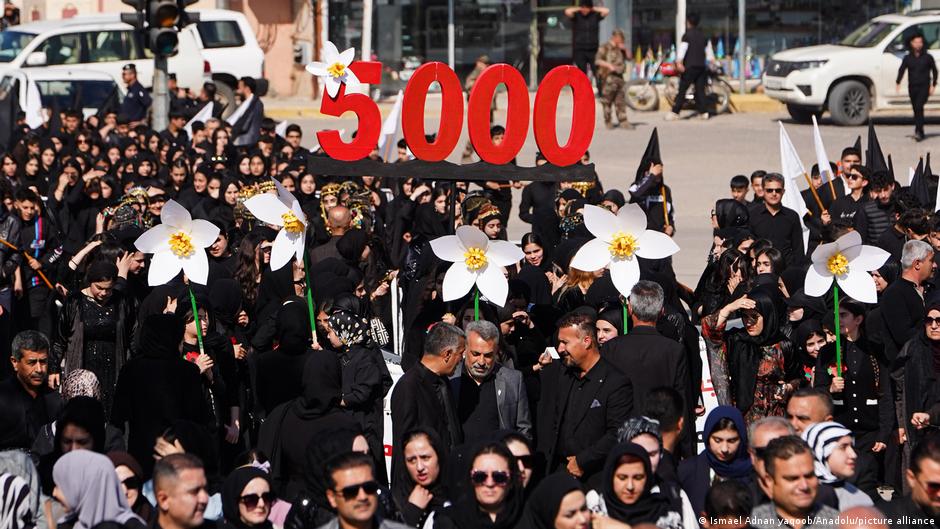
"Some 182,000 Kurds living in Iraqi Kurdistan were killed in 1988 by chemical weapons launched by Saddam Hussein's regime in a series of attacks known as the Anfal campaign. That campaign included chemical attacks on Halabja, a village on the Iraq-Iran border, and other communities. Five thousand people are estimated to have died in Halabja. They were the victims of sarin and VX nerve agents, and mustard gas."
"Clinical psychologist Ibrahim Mohammed studied the experiences of 500 survivors to quantify the attack's lasting impact on people's mental health. His group found around 4 in 5 survivors met clinical criteria for Post Traumatic Stress Disorder (PTSD) and around 3 in 4 had clinical depression or anxiety, but also found that fewer than 1 in 5 had received treatment for these conditions."
"Mohammed did not respond to DW's requests for comment. However, in an editorial note attached to the report, published in the journal Frontiers in Psychology, said, "even decades after the chemical gas attack, many survivors showed severe PTSD, depression, and anxiety." Survivors taking part in the study also reported ongoing symptoms of pain, fatigue and other chronic health problems."
The 1988 Anfal campaign killed some 182,000 Kurds in Iraqi Kurdistan, including an estimated 5,000 residents of Halabja exposed to sarin, VX and mustard gas. About 6,000 survivors remain in the region and continue to carry physical and psychological scars. A study of 500 survivors found roughly 4 in 5 met criteria for PTSD and about 3 in 4 suffered clinical depression or anxiety, while fewer than 1 in 5 had received treatment. Survivors reported ongoing pain, fatigue and other chronic health problems. The attack casts a long shadow over communities, with survivors and family members still grappling with loss and stigma.
Read at www.dw.com
Unable to calculate read time
Collection
[
|
...
]